What Is a Pool Safety Certificate? (QLD Guide )
If you own a swimming pool in Queensland, you’ve probably heard the term pool safety certificate. While it may seem like just another piece of paperwork, this certificate plays a crucial role in ensuring pool areas meet Queensland’s strict safety standards. Whether you’re selling your home, leasing a property, or running short-term accommodation, knowing when you need a pool safety certificate — and what’s required to get one — is essential.
This guide explains exactly what a pool safety certificate is, why it matters, and the specific requirements for pool owners across Queensland.
What Is a Pool Safety Certificate?
A pool safety certificate is an official document issued by a licensed pool safety inspector confirming that your pool barrier complies with Queensland’s pool safety laws. It verifies that:
- The pool fence meets height and spacing requirements
- Gates self-close and self-latch correctly
- Non-climbable zones are clear
- Windows, doors, and boundary barriers meet legal standards
- The overall area is safe and secure
Certificates are recorded on the Queensland Pool Safety Register, and each certificate is valid for a limited period depending on the type of property.
Why Are Pool Safety Certificates Required in QLD?
Queensland has some of the toughest pool safety regulations in Australia due to the risk of drowning incidents, particularly involving young children. Many accidents happen because of:
- Faulty or missing gate latches
- Damaged or climbable fences
- Unmaintained barriers
- Gaps created by landscaping changes
To reduce these risks, pool owners must comply with the Queensland Development Code (QDC) MP 3.4, and certificates act as proof that your pool meets this safety standard.
When Do You Need a Pool Safety Certificate in QLD?
You do not need a pool safety certificate just to own a private pool — but you do need one in the following situations:
1. When Selling a Property With a Pool
A certificate must be provided before settlement. If you don’t have one, you must give the buyer a Form 36 stating that the property does not have a current certificate. The buyer then becomes responsible for obtaining one within 90 days.
2. When Leasing a Property
Landlords must have a
current certificate before a new tenancy agreement begins. It must also be included with the lease documents.
Certificates last for
2 years (non-shared) or
1 year (shared pools).
3. When Operating Short-Term Accommodation
If you run an Airbnb, holiday rental, or short-stay property, you must have a valid pool safety certificate at all times. This applies whether the pool is shared or private.
4. When the Previous Certificate Has Expired
Certificates are not permanent. If yours expires and you’re renting or leasing the property, you must arrange a new inspection and obtain a new certificate.
How Long Does a Pool Safety Certificate Last?
The validity period depends on the type of pool:
- 2 years for non-shared pools
(e.g., private residential homes) - 1 year for shared pools
(e.g., apartments, townhouses, resorts, complexes)
Even if a certificate expires, your pool must still remain compliant with all safety regulations.
Who Can Issue a Pool Safety Certificate?
Only a licensed pool safety inspector registered with the QBCC (Queensland Building and Construction Commission) can issue a certificate.
Inspectors will:
- Inspect the pool barrier
- Identify non-compliant areas
- Provide a report outlining what needs to be fixed
- Reinspect once issues are corrected
- Issue the certificate once compliance is achieved
Homeowners cannot self-certify or rely on pool builders, real estate agents, or cleaners to check compliance.
What Happens During a Pool Safety Inspection?
During the inspection, the licensed inspector will assess the entire pool area, including:
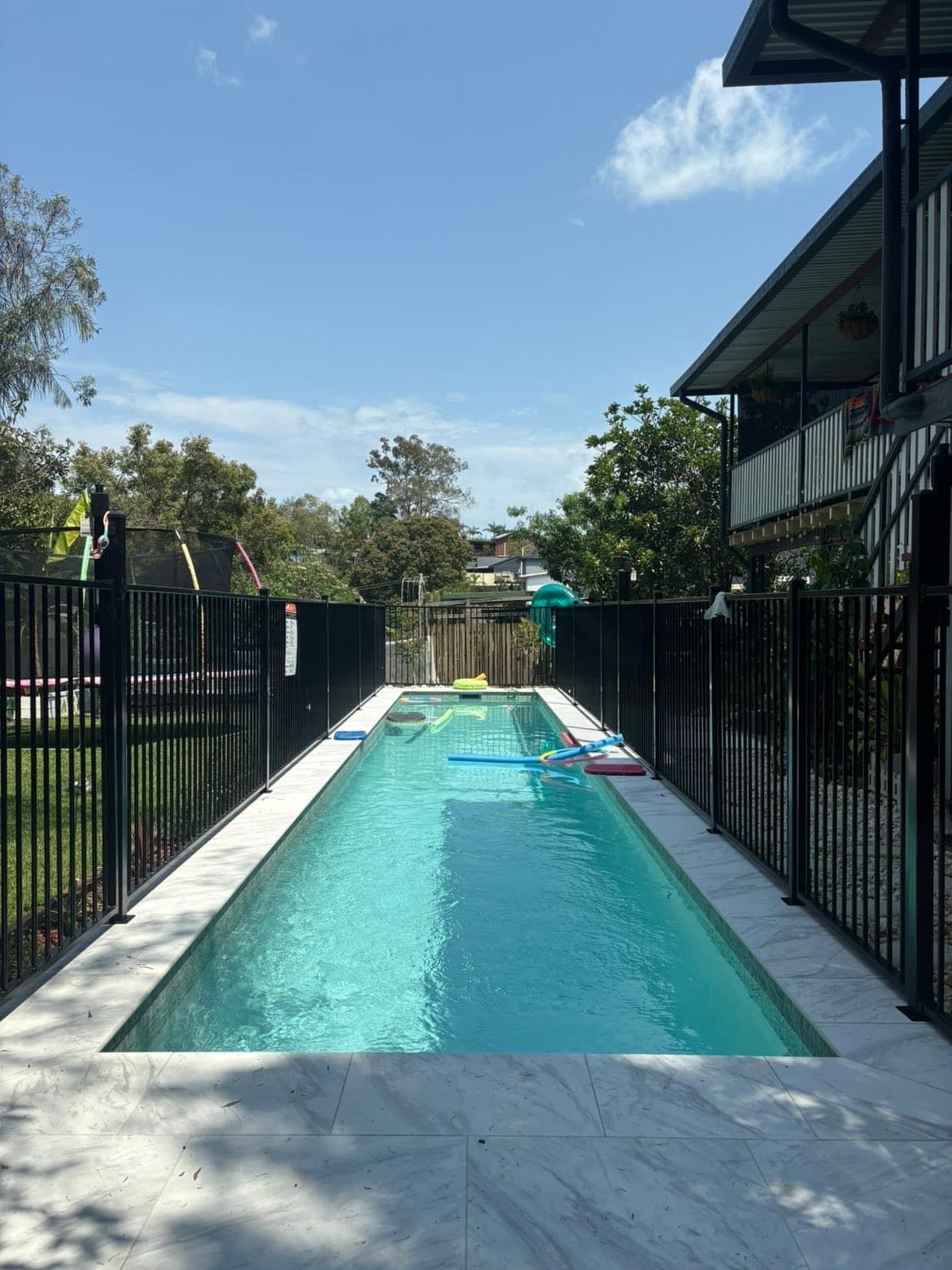
Fencing and Barriers
- Minimum fence height (1200mm)
- Gaps under or between fence rails (max 100mm)
- Structural strength and durability
Gates and Latches
- Must swing away from the pool
- Must self-close and self-latch from any position
- Latch height and shield positioning must comply
Non-Climbable Zones (NCZs)
- 900mm NCZ around the outside of the fence
- No climbable objects, landscaping, or railings
Boundary Fences
- Must be at least 1800mm high when forming part of the barrier
Doors and Windows
- Doors must not open into the pool area (with rare exceptions for older homes)
- Windows must have compliance screens or opening restrictions
If the inspector identifies issues, they will issue a Notice of Nonconformity and allow time for repairs.
Once everything is compliant, the pool safety certificate is issued.
How Much Does a Pool Safety Certificate Cost in QLD?
Costs vary depending on the inspector and the complexity of the inspection, but most Queensland pool safety inspections range between:
- $100–$500 for standard residential pools
- Additional fees for reinspections if repairs are required
If the barrier is significantly non-compliant, further costs may apply for repairs, modifications, or replacement fencing.
Do You Need a Certificate for a New Pool?
For new pools, the builder must:
- Install a compliant barrier
- Arrange a final inspection with a building certifier
- Provide a Form 17 (Final Inspection Certificate)
Once complete, the pool is added to the state register. A pool safety certificate is not required unless you plan to sell or lease the property.
How to Check if Your Pool Has a Current Certificate
You can look up your property on the Queensland Pool Safety Register, using either:
- Your address
- Your title reference number
- The pool safety certificate number (if known)
This allows you to confirm whether your certificate is valid or expired.
What Happens if Your Pool Doesn't Comply?
If your pool fails an inspection or is found to be non-compliant, consequences may include:
- A Notice of Nonconformity
- Fines issued by council
- Delays in selling or leasing
- Potential insurance complications
- Increased risk of accidents
The property owner is ultimately responsible for ensuring compliance — not the tenant, agent, or pool service company.
Why Maintaining Compliance Matters
Even with a valid certificate, you must maintain your pool barrier at all times. Everyday things can make a compliant pool unsafe, such as:
- Soil erosion creating large gaps under the fence
- Trees growing into climbable areas
- Gate hinges wearing out
- Furniture or toys placed near the barrier
- Rusted, damaged, or loose panels
Regular checks ensure your barrier remains safe long after the certificate has been issued.
Final Thoughts
A pool safety certificate is more than a formal requirement — it’s a crucial safeguard that ensures your pool area meets Queensland’s strict barrier standards. Whether you're selling, leasing, or operating a holiday rental, staying compliant protects your family, guests, and property.
Understanding when you need a certificate, how long it’s valid for, and what inspectors look for makes the process smoother and helps you avoid fines or delays. With the right maintenance and a compliant barrier, your pool area will remain safe, secure, and enjoyable for everyone.
To ensure your new build Gold Coast swimming pool is compliant, get in touch with JKO Pool Construction.
Written By Blake & Josh
With a combined 16 years of hands-on experience, we pride ourselves on delivering pools built to the highest standard.