Does A Pool Add Value To Your Home?
If you're thinking about building a swimming pool, one question is almost guaranteed to come up: "Will it actually add value to my home?"
It's a smart question. A concrete pool is a significant investment, so it's only natural to wonder whether you'll see that money reflected in your property's value if you decide to sell in the future.
After building pools across the Gold Coast, we've found that the answer isn't as straightforward as a simple yes or no. In many cases, a well-designed pool can absolutely make a home more desirable and increase its value. However, not every pool delivers the same result.
The size of your backyard, the design of the pool, the quality of construction and even the suburb you live in all play a role in how buyers perceive your property.
One thing we've learnt over the years is that buyers rarely ask, "How much did this pool cost to build?" Instead, they imagine themselves enjoying it. They picture summer afternoons with the kids, weekend barbecues with friends or relaxing beside the water after work. That's where much of the value comes from—the lifestyle your home offers.
In this guide, we'll explain when a pool can increase your property's value, the situations where it might not, and what you can do to maximise your investment.
Why Pools Are So Popular on the Gold Coast
Location plays a huge role in whether a pool adds value.
On the Gold Coast, outdoor living isn't limited to a few months of the year. Our warm climate means families spend much more time outside, making swimming pools one of the most desirable backyard features for many homeowners.
In fact, buyers often expect quality outdoor entertaining areas when inspecting homes throughout the region. A thoughtfully designed pool that complements the home can become one of its biggest selling points.
We've worked with homeowners building pools in established suburbs, new housing estates and acreage properties, and while every project is different, the goal is usually the same—to create a backyard that's enjoyable today while also adding long-term appeal to the property.
Does a Pool Actually Increase Property Value?
For many homes, yes.
A professionally designed and constructed concrete pool can improve both the appeal and market value of your property.
However, it's important to understand why.
A pool doesn't automatically increase value simply because it's there.
Instead, buyers place value on how well the pool improves the overall property.
Questions buyers often ask themselves include:
- Does the pool suit the home?
- Is there still plenty of usable backyard?
- Does the entertaining area feel complete?
- Is the pool modern and well maintained?
- Can I picture my family using this space?
When the answer to these questions is yes, buyers are generally more willing to pay a premium.
Lifestyle Often Creates More Value Than the Pool Itself
One thing we've noticed after completing pool projects is that homeowners often underestimate how much a pool changes the way they use their property.
Many clients originally tell us they're building a pool for the kids.
A year later, they often say the adults use it just as much.
Swimming pools naturally become the centrepiece of outdoor living.
They encourage people to spend more time outside, entertain more frequently and make better use of the backyard.
For many families, the pool becomes the place where birthdays are celebrated, Christmas lunches are held and weekends are spent together.
Those experiences don't directly appear on a property valuation—but they absolutely influence how buyers feel when they inspect a home.
Real estate decisions are rarely based on numbers alone.
Emotion plays a huge role.
When a Pool Adds the Most Value
Although every property is different, we've found pools generally add the most value when several factors come together.
The Pool Looks Like It Belongs
One of the biggest mistakes homeowners make is treating the pool as a separate project.
The best pools don't look like they've simply been placed in the backyard.
Instead, they feel like part of the home's original design.
The pool should work with:
- The home's architecture
- Outdoor entertaining areas
- Landscaping
- Fencing
- Paving
- Lighting
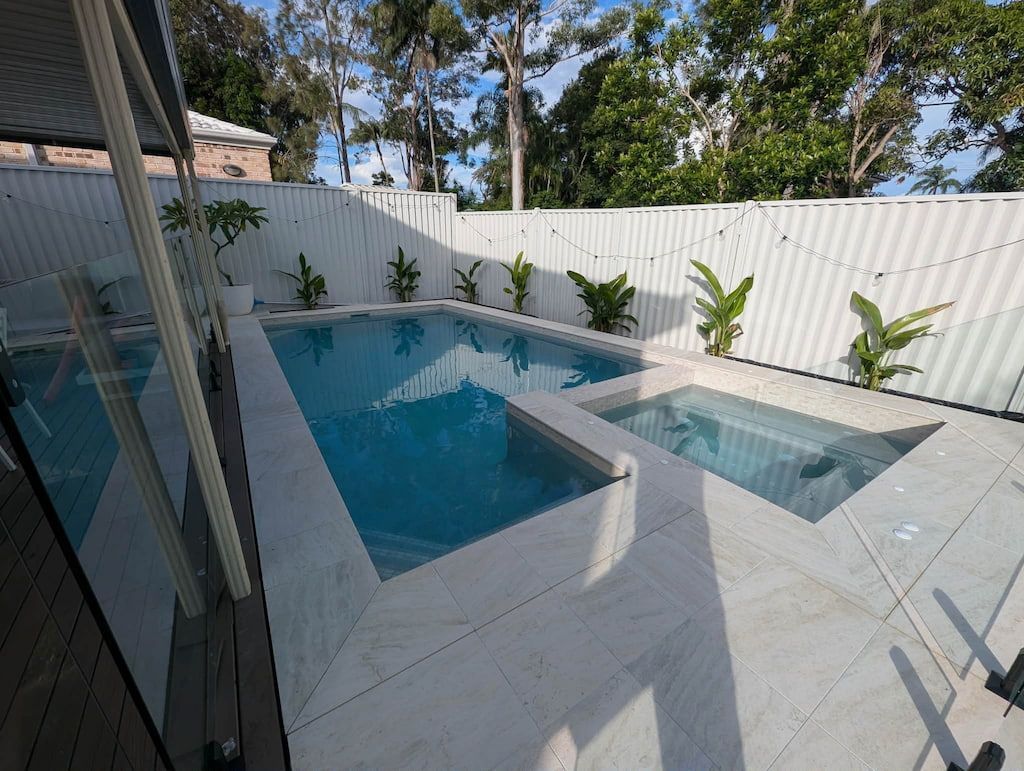
When everything flows together, buyers often see the backyard as one complete outdoor living area rather than just a house with a pool.
The Backyard Still Feels Functional
Bigger isn't always better.
We've occasionally met homeowners who initially wanted the largest pool possible.
After discussing how they actually use their backyard, they often choose a more balanced design.
A pool shouldn't eliminate every bit of lawn or outdoor space.
Families still want room for children to play, pets to run around or outdoor furniture to create comfortable entertaining areas.
A thoughtfully designed pool often adds more value than simply installing the biggest one that fits.
The Pool Is Built to a High Standard
Quality always matters.
Buyers notice:
- Straight tile lines.
- Attractive coping.
- Modern finishes.
- Quality paving.
- Well-designed landscaping.
- Clean equipment installations.
Even people who know very little about swimming pools can usually tell when a pool has been professionally built.
The opposite is also true.
Poor workmanship, dated finishes or obvious defects can reduce buyer confidence before they even inspect the rest of the home.
Which Type of Pool Adds the Most Value?
This is another question we hear regularly.
While every buyer has different preferences, custom concrete pools are generally viewed as the premium option.
One of their biggest advantages is flexibility.
Unlike pre-manufactured pool shells, concrete pools can be designed specifically to suit:
- The shape of your block.
- Sloping sites.
- Narrow backyards.
- Large entertaining areas.
- Modern architectural homes.
- Unique landscaping.
Rather than forcing the backyard to suit the pool, the pool is designed to suit the property.
This creates a much more integrated appearance that buyers often appreciate.
The Backyard Matters Just as Much as the Pool
One mistake people sometimes make is assuming buyers only care about the swimming pool.
In reality, they see the entire outdoor area.
Some of the most impressive projects we've completed haven't necessarily had the biggest pools.
Instead, they've featured a combination of:
- Quality landscaping.
- Large alfresco areas.
- Feature lighting.
- Timber or stone finishes.
- Comfortable seating.
- Outdoor kitchens.
- Thoughtful planting.
The pool becomes one part of a complete outdoor lifestyle.
That's what buyers remember.
Common Reasons Pools Don't Add Value
While many pools increase buyer appeal, not every pool has the same effect.
Sometimes a poorly planned installation can actually reduce interest.
Examples include:
- A pool that dominates a small backyard.
- Poor-quality construction.
- Outdated paving and fencing.
- Neglected maintenance.
- Difficult access around the pool.
- Designs that don't suit the home.
We've inspected properties where the pool itself wasn't the problem—it simply didn't fit the space.
Good pool design is about balance, not just size.
Does an Expensive Pool Always Add More Value?
Surprisingly, not always.
Adding every available feature doesn't necessarily mean buyers will pay significantly more.
Water features, heating systems, integrated spas and premium finishes can certainly improve the experience of owning the pool.
However, buyers generally place greater value on good design than expensive extras.
A simple, beautifully finished pool that complements the property will often appeal to more buyers than an oversized, highly customised pool that overwhelms the backyard.
One piece of advice we regularly give homeowners is to build the right pool for the home—not simply the most expensive one possible.
Does a Pool Add More Value Than Renovating a Kitchen?
This is a question we hear from homeowners who are deciding where to invest their renovation budget.
The truth is that there isn't one answer for every property.
A modern kitchen appeals to almost every buyer, while a swimming pool appeals more strongly in certain markets and climates.
On the Gold Coast, however, a quality concrete pool can often have a much greater impact than it would in cooler parts of Australia. Buyers here expect outdoor living, and a well-designed pool can become one of the home's standout features.
Rather than choosing between a kitchen or a pool, many of the homes that achieve the strongest sale prices combine indoor and outdoor living seamlessly. A beautiful kitchen that opens onto an alfresco area overlooking a professionally built pool creates a lifestyle that many buyers are willing to pay a premium for.
What Buyers Really Notice During an Inspection
When buyers inspect a property, they rarely stand beside the pool calculating how much it might have cost to build.
Instead, they're asking themselves a much simpler question:
"Can I imagine living here?"
That emotional connection is incredibly important.
Some of the first things buyers notice include:
- How inviting the backyard feels.
- Whether the pool suits the style of the home.
- If the entertaining area feels spacious.
- The condition of the paving and landscaping.
- How well the pool has been maintained.
- Whether the entire outdoor space feels practical.
One thing we've noticed after designing pools across the Gold Coast is that buyers are often drawn to backyards where everything works together. The pool isn't the only feature they remember—it's the overall feeling the space creates.
Concrete vs Fibreglass – Which Adds More Value?
Both concrete and fibreglass pools can improve a property's appeal, but they offer different advantages.
Fibreglass pools are generally quicker to install and come in a range of pre-manufactured shapes and sizes.
Concrete pools, however, offer complete design flexibility.
They can be customised to suit:
- Narrow blocks.
- Sloping sites.
- Irregular backyards.
- Luxury homes.
- Small courtyards.
- Large family entertaining areas.
This flexibility allows the pool to feel like it was always part of the home's original design rather than something added later.
From a resale perspective, buyers often perceive custom concrete pools as a premium feature because they're unique to the property and integrated into the overall landscape design.
Maintenance Matters More Than Many People Think
Even the most beautiful pool can lose its appeal if it hasn't been looked after.
Buyers notice cloudy water, damaged tiles, cracked paving and neglected landscaping almost immediately.
The good news is that modern pools are much easier to maintain than many people realise.
Energy-efficient pumps, robotic cleaners, automated chlorinators and quality filtration systems have significantly reduced the amount of manual work required.
When presenting your home for sale, simple things like sparkling water, clean coping, tidy gardens and well-maintained equipment can dramatically improve first impressions.
How to Maximise the Value Your Pool Adds
If you're investing in a new pool, there are several ways to help maximise its contribution to your property's value.
Choose a Timeless Design
Trends come and go, but simple, elegant designs tend to appeal to the widest range of buyers.
Rectangular pools, soft contemporary curves and neutral finishes generally remain attractive for many years.
Think Beyond the Pool
Some homeowners spend their entire budget on the pool itself and leave the surrounding area unfinished.
In our experience, the areas around the pool are just as important.
Consider including:
- Quality paving.
- Attractive landscaping.
- Outdoor lighting.
- Comfortable entertaining areas.
- Shade structures.
- Seamless access from the home.
These features help create a backyard that buyers can immediately picture themselves enjoying.
Build the Right Size
A pool should enhance your backyard—not dominate it.
We've often helped clients reduce the size of their original design after discussing how they actually planned to use the space.
The result is usually a more balanced backyard with room for entertaining, children, pets and gardens.
Invest in Quality Construction
A swimming pool is something you'll hopefully enjoy for decades.
Choosing experienced builders, quality materials and proven construction methods doesn't just improve the finished product—it also gives future buyers greater confidence in the investment they're making.
Common Mistakes That Can Reduce Value
While pools often increase buyer appeal, poor planning can have the opposite effect.
Some of the most common mistakes include:
- Installing a pool that's far too large for the block.
- Ignoring landscaping and outdoor living areas.
- Choosing trendy finishes that quickly date.
- Cutting corners during construction.
- Failing to maintain the pool properly.
- Overcapitalising with expensive features that don't suit the home.
A successful pool project isn't about spending the most money—it's about creating an outdoor space that complements the property and the lifestyle of the people living there.
Is Building a Pool Worth It?
For most homeowners, the answer extends well beyond resale value.
A swimming pool isn't simply an investment in your property.
It's an investment in how you live.
Over the years we've met countless families who originally built a pool because they thought it would add value when they eventually sold.
A few years later they tell us something different.
The pool became the favourite part of the home.
It's where birthdays are celebrated, children learn to swim, friends gather on weekends and parents relax after work.
Those memories can't be measured on a property valuation, but they're often the reason homeowners say building a pool was one of the best decisions they made.
If the pool also helps attract more buyers and achieve a stronger sale price one day, that's an added bonus.
Final Thoughts
So, does a pool add value to your home?
In many cases, yes—but it's not simply about having a swimming pool. The greatest value comes from creating an outdoor space that feels like a natural extension of your home. A well-designed concrete pool, combined with thoughtful landscaping and quality construction, can improve your lifestyle today while making your property more appealing to future buyers.
At JKO Pool Construction, we've helped homeowners across the Gold Coast transform ordinary backyards into spaces where families spend more time together, entertain more often and create lasting memories. Every project is designed to suit the home, the block and the way our clients want to live—not just to follow the latest trends.
If you're considering building a pool and would like honest advice about what will work best for your property, we'd love to help. Whether you're looking for a sleek modern lap pool, a family-friendly backyard oasis or a custom concrete pool designed specifically for your home, our experienced team can guide you through every stage of the process.
A well-built pool isn't just something you add to your backyard—it's an investment in your home, your lifestyle and the way you enjoy your outdoor space for years to come.
Written By Blake & Josh
With a combined 16 years of hands-on experience, we pride ourselves on delivering pools built to the highest standard.