Pool Fencing Requirements QLD
Queensland has some of the strictest swimming pool safety regulations in the country, and for good reason. The rules are designed to prevent accidents—especially those involving young children—and ensure every pool owner maintains a secure, fully compliant barrier. Understanding these fencing requirements isn’t just about avoiding fines; it’s about creating a safe environment for everyone who uses your pool.
In this comprehensive guide, we’ll walk through the full list of Pool Fencing Requirements in QLD, including legal standards, measurements, materials, gate regulations, inspection obligations, and maintenance expectations.
Why Pool Fencing Laws Matter in QLD
Queensland introduced strong pool safety legislation after years of data showing preventable drowning incidents in backyards. In many cases, the accidents occurred due to:
- Inadequate or damaged fencing
- Gates that failed to self-close
- Climbable objects giving children access to the pool
- Barriers not maintained over time
To reduce these risks, the state created a single, consistent safety standard known as the Queensland Development Code (QDC) MP 3.4. This standard applies to every regulated pool in Queensland—new, existing, and renovated.
Whether you own a home pool, manage a rental property, or operate short-term accommodation, complying with QLD pool fencing requirements is mandatory.
Which Pools Must Comply With QLD Pool Fencing Requirements?
The fencing rules apply to all regulated pools, including:
- In-ground and above-ground pools
- Permanent and temporary pools
- Portable pools deeper than 300mm
- Spas (unless they have a compliant, lockable lid)
- Pools in rental properties
- Pools in units, apartments, and body corporate settings
If a pool can hold water deeper than 300mm, it is legally considered a regulated swimming pool and must meet fencing standards.
Minimum Pool Fence Height Requirements in QLD
One of the core pool fencing requirements in Queensland relates to height. A compliant pool fence must be at least 1200mm high, measured from finished ground level.
In addition:
- The measurement must be taken from the highest point of ground adjacent to the fence—not from inside the pool area.
- If the ground slopes, the barrier must remain at least 1200mm everywhere.
- If the fence is built on top of structures like retaining walls or planter boxes, height requirements adjust accordingly.
This minimum height is designed to prevent young children from easily climbing over the barrier.
Pool Fence Materials and Construction Standards
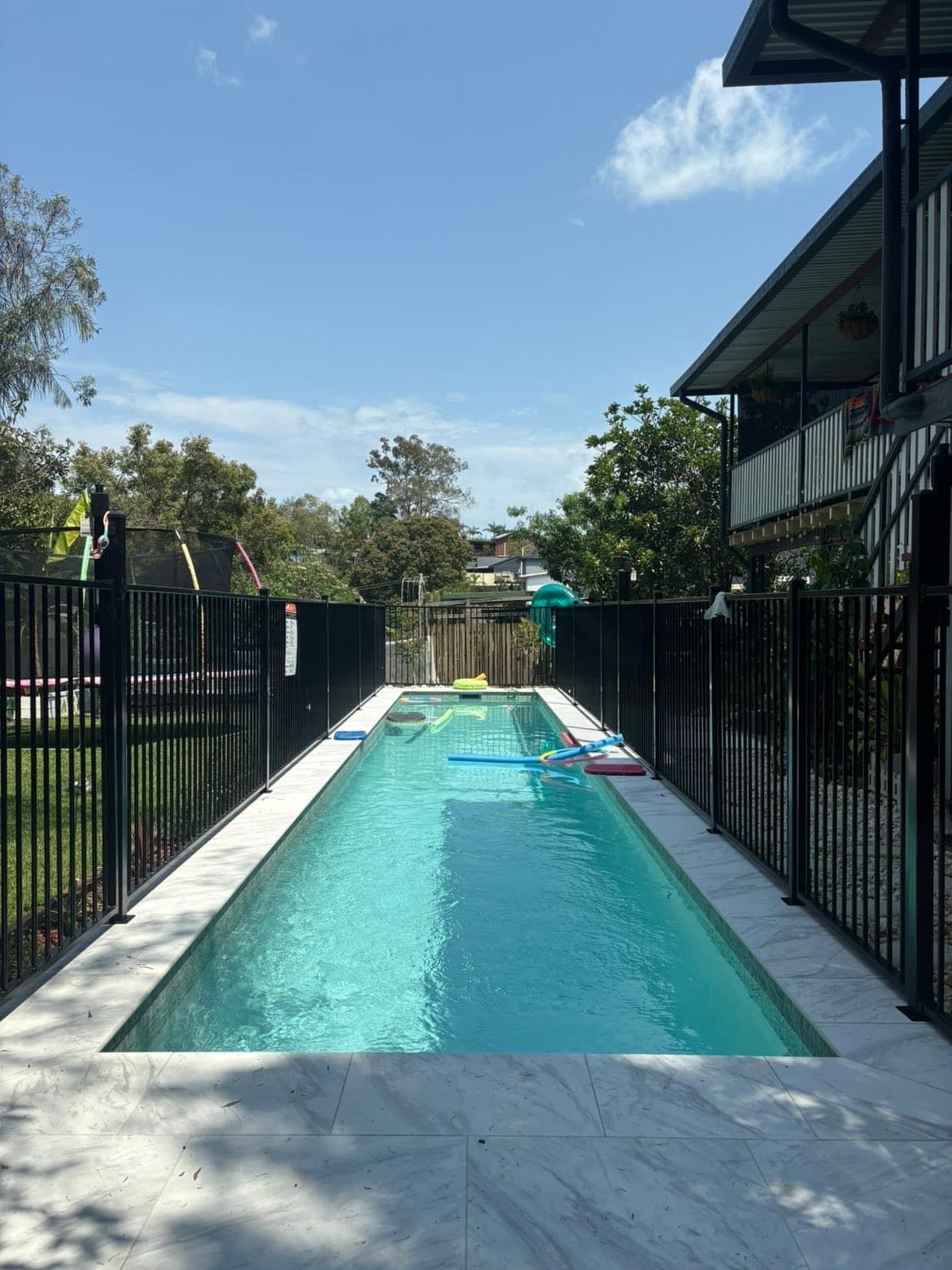
Your pool barrier must be strong, durable, and difficult to climb. Acceptable materials include:
- Aluminium
- Steel
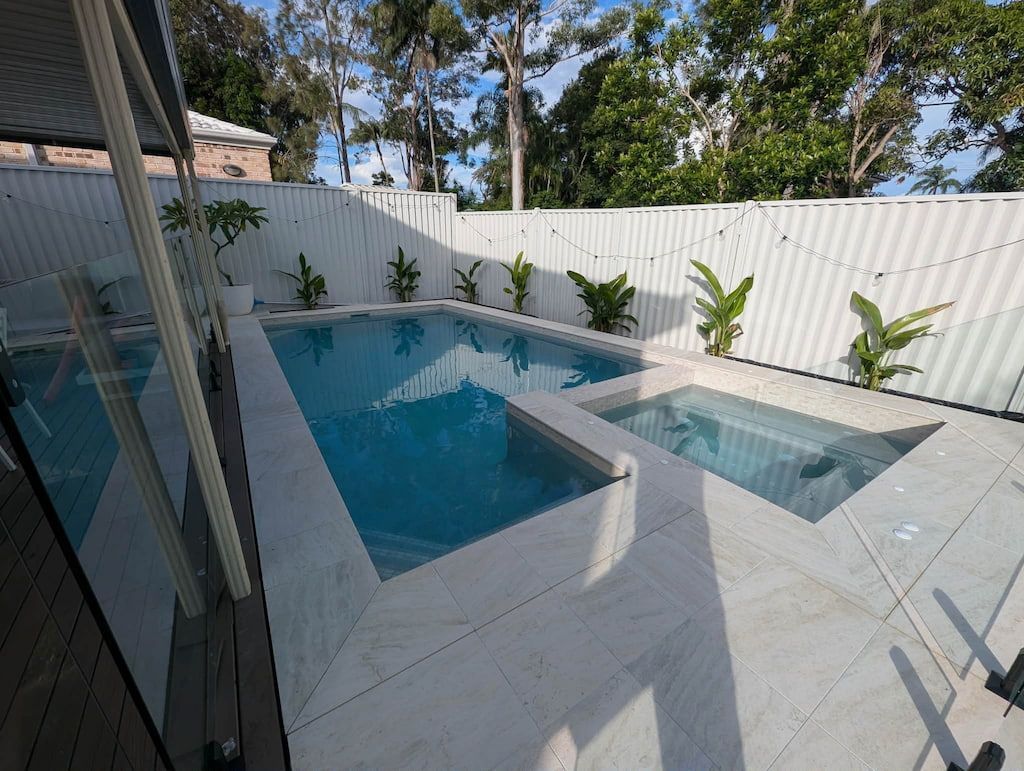
- Glass (frameless or semi-frameless)
- Timber (if structurally sound and compliant)
Mesh, chain-link, and other alternative materials may be permitted but must comply with specific spacing and structural rules.
All fences must be securely anchored and capable of resisting strong force, wind, and movement without compromising safety.
Non-Climbable Zones (NCZs)
One of the most important rules in the QLD pool fencing standard is the non-climbable zone, known as the NCZ. This exists to prevent children gaining leverage or footholds that help them climb over the barrier.
The key points include:
1. The 900mm Non-Climbable Zone
A 900mm arc must be maintained on the outside of the fence. Within this space, there cannot be:
- Trees or overhanging branches
- Pot plants
- Ladders
- Pool pumps or filters
- Furniture
- Barbecues
- Garden beds or retaining walls that reduce height
If anything is located within this zone, it may make the fence non-compliant.
2. Objects Inside the Pool Area
Inside the pool area, objects must also be managed. If seating, bar areas, or equipment create climbing points, compliance may be affected.
3. Boundary Fences as Pool Barriers
If a boundary fence forms part of the pool barrier:
- It must be at least 1800mm high.
- A 900mm non-climbable zone must be maintained on the pool side of the fence.
Boundary fences often require additional modifications such as capping or adding angled extensions to achieve compliance.
Pool Gate Requirements in QLD
Pool gates are one of the most commonly failed areas during inspections. Queensland’s rules around gate operation and latch positioning are strict.
A compliant pool gate must:
- Swing outward, away from the pool area
- Be self-closing from any position
- Self-latch automatically
- Not be propped open at any time (this is a legal breach)
Gate Latch Rules
The latch must be placed:
- At least 1500mm above ground level, OR
- At least 1400mm above the highest lower horizontal rail, with a shield to prevent access
Latches must be in excellent working condition, and gates must close smoothly without friction or obstruction.
Gaps, Spacing, and Structural Requirements
To reduce climbing opportunities and prevent access through the barrier, the Queensland regulations outline specific spacing limits:
- Vertical gaps between fence bars: no more than 100mm
- Gaps under the fence: no more than 100mm
- Horizontal rails must be spaced to avoid footholds
- Glass panels must be secured and undamaged
Any movement, bending, or deterioration that increases spacing must be repaired immediately.
Doors and Windows Facing the Pool Area
Under current laws, doors cannot open directly into a pool area for homes built after 1992. All external access must be through a compliant pool gate.
For older properties where doors were previously allowed:
- They must self-close and self-latch
- They must meet strict compliance rules
- Retrofitting a fence or altering the layout is often required
Windows facing the pool area must comply with one of the following:
- Have security screens
- Be permanently restricted to openings of 100mm or less
- Have compliant glazing and latching
Temporary Fencing Requirements
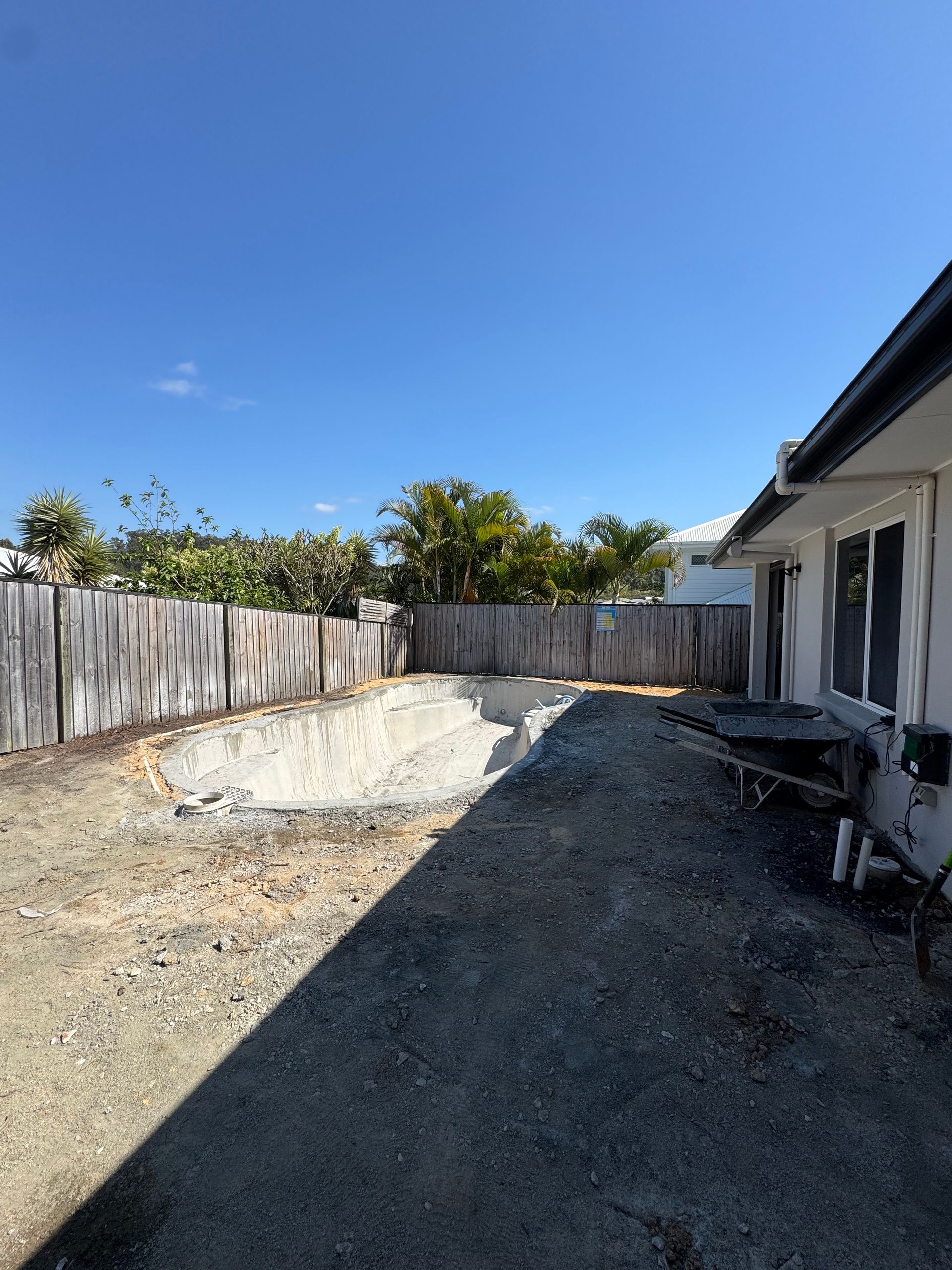
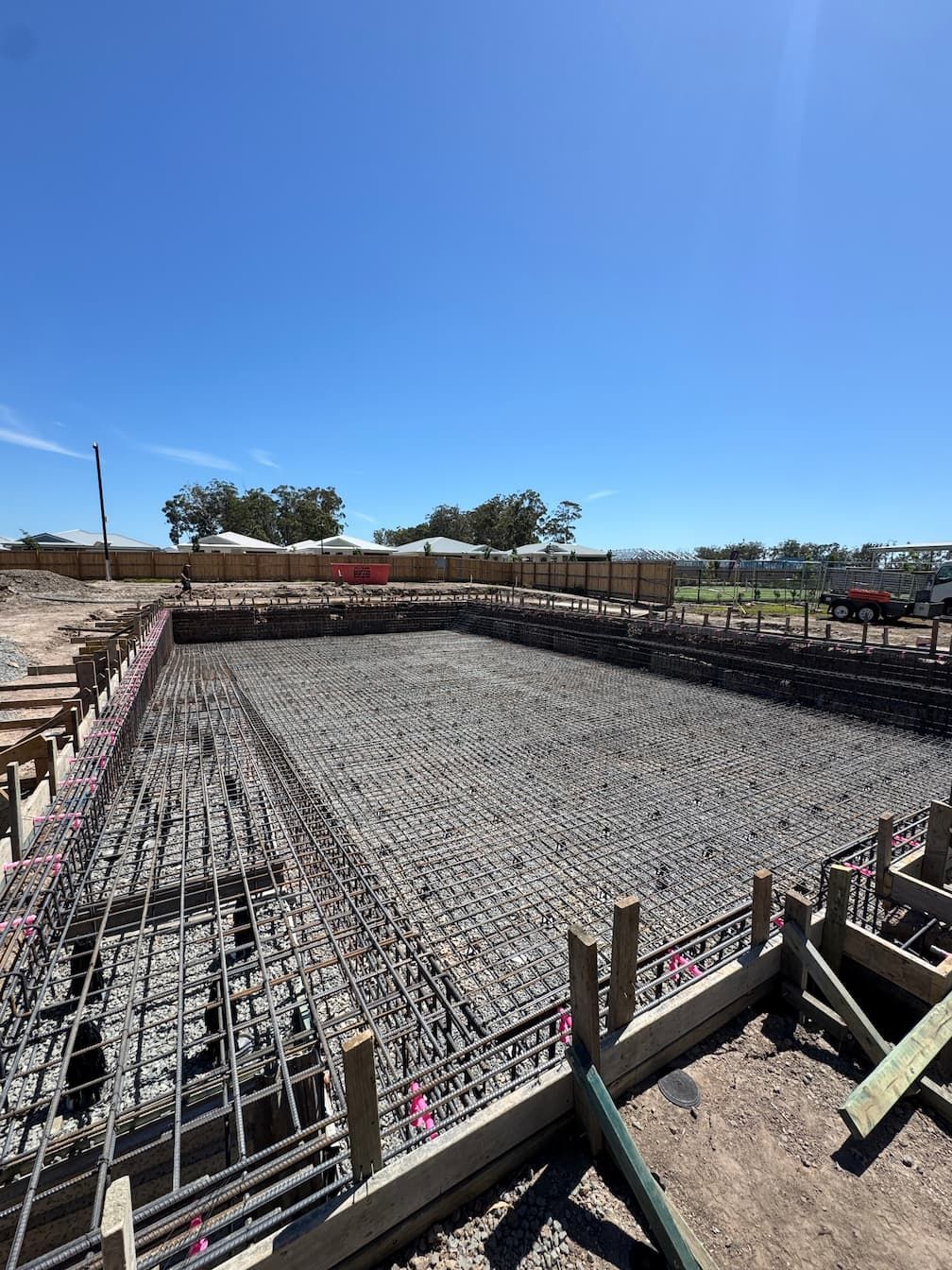
If your pool is under construction or undergoing renovation, temporary fencing must be installed until the permanent barrier is complete.
Temporary pool fences must:
- Meet the same height requirements (minimum 1200mm)
- Have secure footings
- Prevent access to water deeper than 300mm
- Be sturdy and non-climbable
Pool builders and homeowners are both legally responsible for ensuring temporary barriers remain compliant throughout the build.
Pool Fence Maintenance Obligations
Meeting the requirements once isn’t enough—you must maintain the barrier at all times.
Regular checks should include:
- Testing the self-closing mechanism on gates
- Ensuring no new climbable objects are placed near the fence
- Removing overgrown plants and branches
- Replacing broken panels
- Checking screws, bolts, and fixtures
- Ensuring no ground erosion has created large gaps
If your fence becomes damaged or non-compliant, you must repair it immediately.
Do You Need a Pool Safety Certificate?
A pool safety certificate is separate from fencing requirements but closely related. You need a certificate when:
- Selling a property
- Leasing a property
- Operating short-term accommodation (e.g., Airbnb)
Certificates last:
- 1 year for shared pools (e.g., units)
- 2 years for non-shared pools (residential homes)
For private homeowners who are not selling or renting, a certificate isn’t required—but compliance is still mandatory.
Common Reasons Pool Fences Fail Inspection
Even properties that seem safe often fail because of small issues. The most common reasons include:
- Gate not self-closing
- Latch positioned incorrectly
- Climbable objects near the fence
- Vegetation creating access points
- Excessive gaps under the fence
- Wobbly or damaged panels
- Non-compliant windows facing the pool
A pre-inspection check often helps resolve small problems before booking a formal inspection.
Penalties for Non-Compliance
The Queensland Government takes pool safety seriously. Non-compliance can lead to:
- Fines from the local council
- Notices requiring immediate repairs
- Delays in property sales
- Insurance complications if an incident occurs
Fines can reach several thousand dollars, depending on the severity of the breach.
How to Ensure Your Pool Fence Remains Compliant
Here are easy ways to stay compliant throughout the year:
- Perform a monthly gate and latch test
- Trim trees or shrubs that encroach on the NCZ
- Keep outdoor furniture away from fence lines
- Replace damaged or loose fixtures promptly
- Reassess compliance if you add landscaping, decking, or renovations
- Arrange professional inspections when in doubt
Compliance isn’t a one-time job—it’s an ongoing responsibility.
Final Thoughts
Understanding Pool Fencing Requirements in QLD is essential for every pool owner. These rules exist to keep children safe, prevent accidents, and create a secure environment for everyone enjoying your pool. By maintaining the correct fence height, keeping gates self-closing, managing non-climbable zones, and staying up to date with the latest standards, you ensure your pool area remains safe, legal, and enjoyable.
If your pool fence is ageing, damaged, or due for an upgrade, a renovation or replacement may be the best way to meet compliance while refreshing the look of your outdoor space.
To ensure your new Gold Coast swimming pool meets compliance, get in touch with JKO Pool Construction.
Written By Blake & Josh
With a combined 16 years of hands-on experience, we pride ourselves on delivering pools built to the highest standard.