Best Pool Tiles
Choosing the right pool tiles is one of the most important design decisions you’ll make when building a Gold Coast swimming pool. Pool tiles don’t just affect how your pool looks — they also influence durability, safety, maintenance, and how well your pool holds up against Australia’s harsh climate.
With strong sun, heat, salt air in coastal areas, and heavy use from families, Australian pools need tiles that can handle both aesthetics and performance. In this guide, we’ll explore the best pool tile options used in Australia, their pros and cons, where they work best, and how to choose the right tiles for your pool design and lifestyle.
Why Pool Tile Choice Matters
Pool tiles play a big role in both the function and appearance of your swimming pool. The right tiles can:
- Improve durability and longevity
- Enhance slip resistance around steps and ledges
- Affect water colour and light reflection
- Handle harsh UV exposure
- Resist fading, staining, and chemical damage
- Complement your landscaping and home design
Choosing low-quality or unsuitable tiles can lead to cracking, fading, and higher long-term maintenance costs.
Ceramic Pool Tiles
Ceramic tiles are one of the most commonly used pool tiles in Australia, particularly for waterlines, feature bands, and steps.
Pros:
- Affordable compared to premium tile options
- Wide range of colours and finishes
- Easy to source across Australia
- Suitable for waterline tiling
- Simple to replace individual tiles if damaged
Cons:
- Less durable than porcelain or glass
- Can fade over time in harsh sun
- Not always suitable for full pool interiors
- More porous than premium options
Ceramic tiles are often used as decorative accents rather than full interior finishes in modern pool designs.
Porcelain Pool Tiles
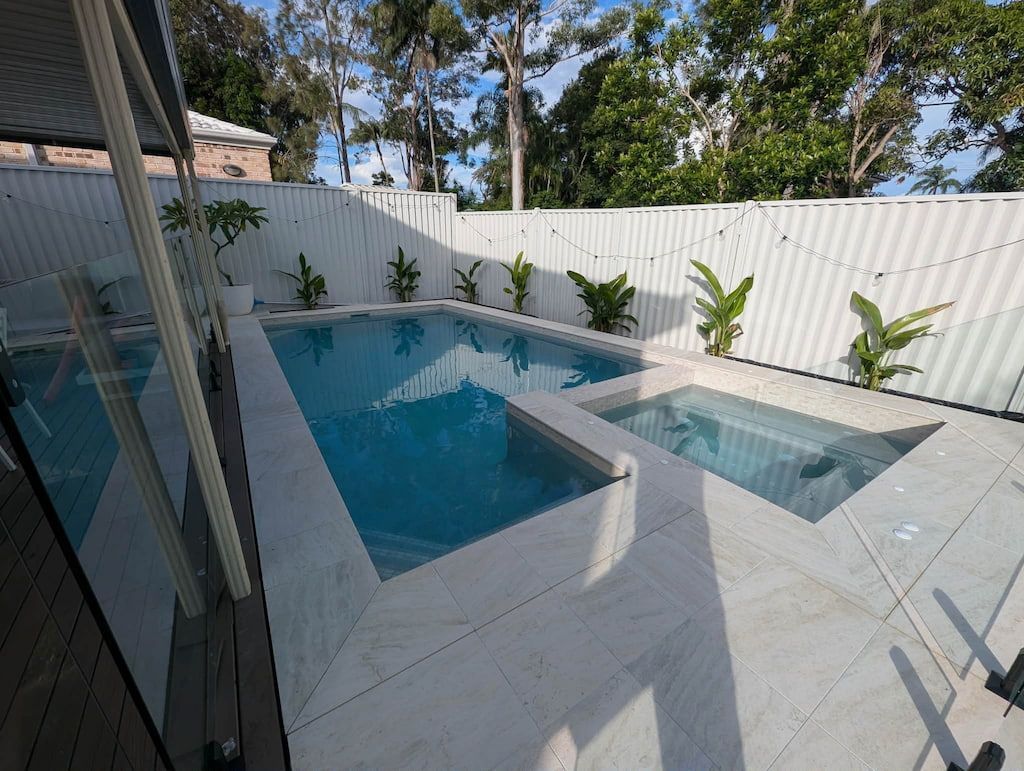
Porcelain tiles are a premium option widely used in Australian residential pools due to their durability and low porosity.
Pros:
- Extremely durable and hard-wearing
- Low water absorption
- Resistant to chemicals and UV fading
- Suitable for full pool interiors
- Available in modern colours and textures
- Great for coping, steps, and waterlines
Cons:
- Higher upfront cost than ceramic
- Professional installation required
- Can be slippery if incorrect finish is chosen
Porcelain tiles are one of the best all-round tile options for Australian conditions, offering longevity and low maintenance.
Glass Pool Tiles
Glass tiles are a luxury pool finish that creates a striking, reflective appearance in the water.
Pros:
- Stunning visual effect
- Enhances water colour and light reflection
- Highly resistant to chemicals
- Non-porous surface
- Modern, premium look
- Wide colour range
Cons:
- Expensive
- Installation is more complex
- Repairs can be costly
- Can show dirt or calcium build-up more easily
Glass tiles are popular in feature walls, waterlines, and luxury pools where aesthetics are a priority.
Mosaic Pool Tiles
Mosaic tiles are small-format tiles often made from ceramic, porcelain, or glass and used to create patterns, borders, or full interior finishes.
Pros:
- Allows for custom designs and patterns
- Flexible for curves and organic shapes
- Wide colour combinations
- Suitable for full pool interiors
- Classic and modern design options available
Cons:
- More grout lines mean more cleaning
- Higher installation cost
- Grout maintenance required
- Labour-intensive installation
Mosaic tiles are commonly used in Australian pools for decorative bands, feature walls, and fully tiled luxury pools.
Natural Stone Pool Tiles
Natural stone tiles offer a premium, earthy aesthetic and are often used around pool surrounds and coping.
Common stone types used in Australia:
- Travertine
- Limestone
- Sandstone
- Granite
Pros:
- Natural, high-end appearance
- Stays cooler underfoot
- Slip-resistant options available
- Blends well with landscaping
- Adds value to outdoor spaces
Cons:
- More porous than porcelain
- Requires sealing
- Higher maintenance
- Can be affected by pool chemicals
- Not always suitable for full pool interiors
Natural stone is better suited to pool surrounds and coping rather than full underwater tiling.
Fully Tiled Pools vs Tiled Waterlines
Many Australian pools use tiles only at the waterline rather than fully tiling the interior.
Waterline Tiles
Benefits:
- Protects pool walls from oils, sunscreen, and scum
- Easier to clean
- Lower cost
- Decorative accent
- Reduces long-term staining
Waterline tiles are a practical and cost-effective upgrade even for concrete and fibreglass pools.
Fully Tiled Pools
Benefits:
- Premium aesthetic
- Fully custom colour and texture
- Highly durable when done correctly
- Easier surface repairs compared to render finishes
- Luxury appearance
Fully tiled pools are more expensive but offer unmatched visual impact and longevity when installed by experienced professionals.
Slip Resistance & Safety
Slip resistance is critical for pool steps, ledges, and surrounding coping tiles.
Look for:
- Textured or matte finishes
- Anti-slip ratings
- Tiles designed specifically for wet areas
- Stone with natural grip
Choosing the wrong finish can increase slip risks, especially in family pools with children.
Colour Choices & Water Appearance
Tile colour dramatically affects how your pool water looks.
- Light tiles = bright, tropical blue water
- Mid-tone blues and greys = classic pool colour
- Dark tiles = deep, lagoon-style look
- Green tones = natural swimming pond aesthetic
Australian designers often favour light blues, pale greys, and natural stone-inspired colours for modern residential pools.
Tile Durability In Australian Conditions
Australian pool tiles must withstand:
- Strong UV exposure
- Salt air in coastal areas
- Chlorine or saltwater systems
- Temperature fluctuations
- Heavy family use
Porcelain and glass tiles perform best in these conditions, while ceramic and natural stone require more care and sealing.
Maintenance & Cleaning Of Pool Tiles
Different tile types require different maintenance:
- Glass tiles: Show calcium build-up easily
- Mosaic tiles: More grout to clean
- Natural stone: Needs sealing and careful chemical balance
- Porcelain tiles: Low maintenance and easy cleaning
- Ceramic tiles: Moderate upkeep
Choosing low-porosity tiles reduces algae growth and staining.
Cost Differences Between Pool Tile Types
Approximate relative cost ranges (materials + installation):
- Ceramic tiles: Budget-friendly
- Porcelain tiles: Mid-range
- Mosaic tiles: Mid to premium
- Glass tiles: Premium
- Natural stone: Premium
While premium tiles cost more upfront, they can reduce long-term maintenance and resurfacing costs.
How To Choose The Best Pool Tiles For Your Pool
When selecting pool tiles, consider:
- Budget
- Desired aesthetic
- Slip resistance
- Pool type (concrete, fibreglass, tiled)
- Location (coastal vs inland)
- Maintenance commitment
- Sun exposure
- Surrounding landscaping
A professional pool builder or tiler can recommend tile types that suit both your design vision and your local conditions.
Final Thoughts: Choosing The Best Pool Tiles For Australian Homes
There’s no single “best” pool tile for every home — the right choice depends on your budget, design preferences, maintenance expectations, and how you use your pool. Porcelain tiles are one of the most popular and practical options for Australian residential pools due to their durability and low maintenance. Glass tiles add luxury and visual impact, while mosaic tiles allow for custom designs and creative finishes.
Taking the time to choose the right pool tiles ensures your pool not only looks great on day one, but continues to perform and impress for years to come.
Written By Blake & Josh
With a combined 16 years of hands-on experience, we pride ourselves on delivering pools built to the highest standard.