Do You Need Council Approval for a Pool?
If you’re planning to build a swimming pool on the Gold Coast, one of the first questions you’ll likely ask is: do I need council approval?
In most cases, yes — council approval is required before you can build a swimming pool in QLD. However, the exact approval process depends on several factors, including your local council, the type of pool you’re building, and where it will be positioned on your property.
This guide explains when council approval is required, what approvals are involved, and what Queensland homeowners should expect before construction begins.
Is Council Approval Required for a Pool in QLD?
In Queensland, most swimming pools require approval under local council planning rules and the Queensland Building Regulations.
Council approval is typically required for:
- In-ground concrete swimming pools
- Fibreglass pools
- Above-ground pools that exceed certain depth or size thresholds
- Pools that require excavation or permanent structures
Even if a pool seems small or simple, it may still require approval due to fencing, setbacks, or safety compliance requirements.
Why Pool Approvals Are Required
Pool approvals exist to ensure:
- The pool complies with safety standards
- Appropriate fencing is installed
- Setback distances from boundaries are met
- Drainage and stormwater are properly managed
- The pool does not impact neighbouring properties
Queensland has strict pool safety laws, particularly around fencing and child safety, which makes approvals a critical part of the process.
What Types of Approvals Are Needed?
In QLD, building a pool often involves more than one approval, depending on your situation.
1. Development Approval (If Required)
Some pools require development approval from council, particularly if:
- The property is affected by overlays (flood, heritage, coastal, environmental)
- The pool does not meet standard setback requirements
- The property is in a regulated zone
Not all pools need development approval, but this must be checked before construction begins.
2. Building Approval
Most pools in Queensland require building approval, which is issued by a private building certifier or council certifier.
Building approval ensures:
- The pool structure meets building standards
- Excavation and construction are compliant
- Engineering requirements are met
This approval is mandatory for the majority of in-ground and structural pools.
3. Pool Safety Compliance
Queensland has some of the strictest pool safety laws in Australia. Before a pool can be legally used or sold with the property, it must comply with:
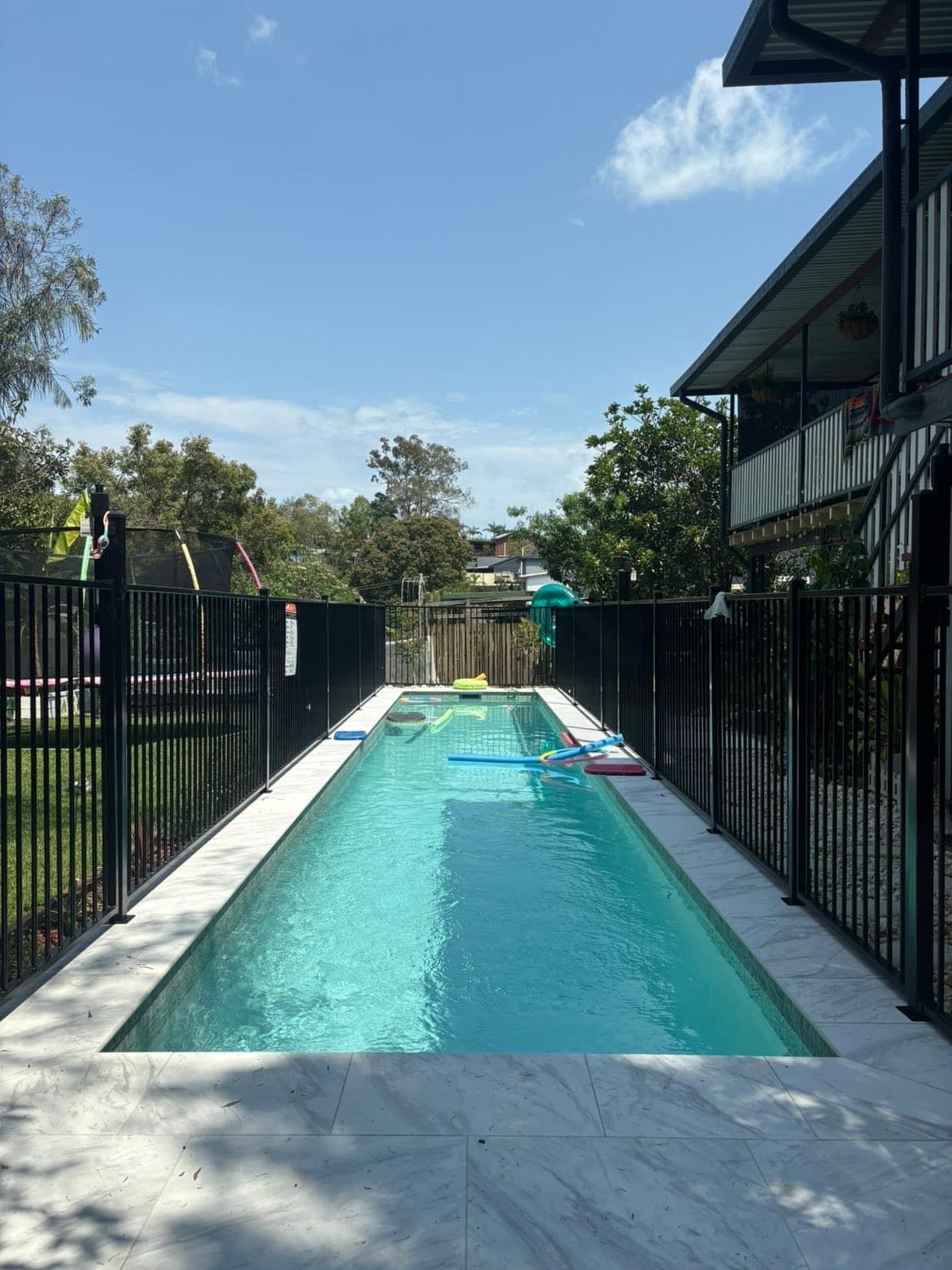
- Pool fencing laws
- Gate and latch requirements
- Non-climbable zones
A pool safety certificate may be required depending on the situation, especially for property sales or leases.
Pool Fencing Laws in Queensland
Pool fencing is a major part of the approval process in QLD.
Key fencing requirements include:
- Minimum fence height requirements
- Self-closing, self-latching gates
- No climbable objects within restricted zones
- Compliant materials and spacing
These laws apply to new pools, existing pools, and even portable pools if they meet depth requirements.
Failure to comply can result in fines and enforcement action.
Setback Requirements for Pools in QLD
Setback rules determine how close your pool can be to:
- Property boundaries
- Buildings
- Easements
- Services
Setback requirements vary by council and zoning. If your pool design does not meet standard setbacks, additional approvals or planning relaxations may be required.
How Long Does Council Approval Take?
Approval timeframes vary depending on:
- Your local council
- Whether development approval is required
- The complexity of the site
- How complete the application is
As a general guide:
- Straightforward building approvals can take 1–3 weeks
- Development approvals can take several weeks or longer
Delays are often caused by missing documentation or site constraints.
What Happens If You Build a Pool Without Approval?
Building a pool without the required approvals in Queensland can result in:
- Stop-work notices
- Fines and penalties
- Orders to modify or remove the pool
- Difficulty selling or leasing the property
It can also void insurance coverage and create serious legal issues down the track.
Who Organises Council Approval?
This depends on your builder.
Some builders leave approvals entirely to the homeowner, while others manage the process as part of their service.
Working with an experienced pool builder can significantly reduce stress, delays, and compliance risks by:
- Identifying approval requirements early
- Coordinating with certifiers
- Ensuring designs meet local regulations
Does Approval Differ Between Councils?
Yes. While Queensland has state-wide regulations, local councils may apply additional planning rules, overlays, or requirements.
This is why site-specific checks are essential before construction begins.
Final Thoughts
So, do you need council approval for a pool in Queensland?
In most cases, yes. The majority of pools require building approval, and some may also require development approval depending on site conditions, zoning, and council regulations. Pool safety compliance is mandatory across Queensland and plays a major role in the approval process.
Getting the approvals right from the start ensures your pool is safe, legal, and built without unnecessary delays.
If you’re planning a new pool, get in touch with JKO Pool Constructions on the Gold Coast.
Written By Blake & Josh
With a combined 16 years of hands-on experience, we pride ourselves on delivering pools built to the highest standard.