
Pool Maintenance Tips: How To Look After Your Pool
After building custom concrete pools across the Gold Coast, our team at JKO Pool Construction recommends a simple maintenance routine you can keep up with through summer. Test the water regularly, clear debris before it settles, keep the water circulating and get to know how your equipment sounds when it’s running normally.
On the Gold Coast, a hot weekend with the pool full of swimmers can use up chlorine faster, and an afternoon storm can leave the skimmer basket packed with leaves. We recommend checking the water again after heavy rain or a big swim day, even if you’ve already done your usual checks that week.
Whether we’ve just handed over your new pool or you’re looking after an older one, here’s what we recommend checking, how often to do it and when to take a closer look.
How often should you maintain your pool?
Use this schedule as a starting point for a backyard pool. Adjust it for how often you swim, the weather, the pool finish and the instructions that came with your equipment.
| When | What to do |
|---|---|
| Daily during the swimming season | Check free chlorine and pH, confirm you can clearly see the pool floor, skim floating debris and check the water level. |
| Weekly | Brush the walls, steps and benches. Vacuum settled debris, empty the baskets and check the filter pressure against its clean baseline. |
| Monthly | Review total alkalinity, stabiliser and calcium hardness as relevant to your setup. Check salt if you have a salt chlorinator, and look for signs of scale or leaks around the equipment. |
| After heavy rain, a heatwave or a busy swim day | Recheck chlorine and pH, clear debris, inspect the water level and confirm the pump is circulating normally. |
| At the change of season | Review pump and chlorinator settings against your test results. Check the condition of the pool cover, equipment and pool gate. |
1. Test the water before adding chemicals
Water can look clear even when the sanitiser is too low. Make free chlorine and pH your first checks. Free chlorine is the chlorine available to disinfect the water, and pH affects how well that chlorine works. A drop after a busy swim day can be easy to miss if you only test once a week.
Use a reliable test kit and take your sample according to its instructions, away from return jets and chemical dosing points. If a reading surprises you, repeat the test with a fresh sample before making a large adjustment. Use the pH and free chlorine targets in your pool handover guide. If you have an older pool and are unsure what to aim for, ask a local pool technician to confirm the targets for your pool finish and sanitising system.
| What you’re testing | Why it matters |
|---|---|
| Free chlorine | Tells you how much chlorine is available to sanitise the water. |
| pH | Affects chlorine performance and contributes to the risk of scale or surface damage when it stays out of range. |
| Total alkalinity | Helps buffer pH. If the pH keeps shifting soon after adjustment, check alkalinity. |
| Calcium hardness | Helps assess the risk of scaling or aggressive water, particularly in a pool with a cement-based finish. Interpret it alongside pH, alkalinity and water temperature. |
| Stabiliser (cyanuric acid) | Slows chlorine loss from sunlight. It also affects the chlorine level you need, so test before topping it up. Some chlorine products already contain stabiliser. |
| Salt | Helps you confirm a salt chlorinator has the concentration it needs to operate. Check the manufacturer’s range and confirm the reading before adding salt. |
A saltwater pool still uses chlorine. The salt cell produces it while the system operates, so check the free chlorine reading even when the chlorinator display shows normal operation. If the reading is repeatedly low, check the pump schedule, chlorinator output and salt level before assuming the cell needs replacement.
Keep a simple log of readings, recent rain and adjustments. Dose based on the test result, your pool volume and the product label. Follow the label for protective equipment, handling and when swimming can resume. Never mix pool chemicals together, and store them in their original containers away from children.
2. Skim, brush and vacuum before debris builds up
Skim leaves while they’re floating. Once they sink, they’re harder to collect and can leave marks on some finishes if they sit in one place. Empty the skimmer basket more often if the pool sits near trees or you’ve had a windy afternoon.
Brush the walls and floor with a brush approved for your pool finish. Pay particular attention to steps, benches, corners and behind ladders, where buildup can go unnoticed. Vacuum the loose material afterwards, or run a robotic cleaner according to its instructions. If you use a robot, check which surfaces it actually reaches. You may still need to brush the waterline and the edges of shallow steps by hand.
For a concrete pool, choose cleaning products based on the interior finish. Exposed aggregate, plaster and tile can require different care. If a stain stays put after gentle brushing, have it identified before using a stain remover. Leaf stains, metal staining and calcium deposits can look similar but need different treatment.
3. Keep the pump, filter and skimmer working together
The pump moves water, the filter captures particles and the sanitiser controls germs. All three need to work consistently. Weak flow at the return jets, a pump that struggles to prime or pressure that changes suddenly can help you narrow down where the problem starts.
- Check the skimmer and pump baskets. Switch off the pump before opening the pump basket, and follow the equipment manual for safe access.
- Record the filter pressure after cleaning. Compare future readings at the same pump speed. Use the manufacturer’s specified pressure rise or service interval to decide when to clean a cartridge or backwash a media filter.
- Check the water level. Around halfway up the skimmer opening is a common starting point, but follow your skimmer’s operating range. If the level is too low, the pump can draw air. If it’s too high, the skimmer may pick up less floating debris.
- Adjust the run schedule using results. Pump speed, pool volume, equipment and daily use all matter. If you shorten the run time, recheck water clarity and free chlorine over the following days, especially if your salt cell only produces chlorine while the pump runs.
If the pump keeps losing prime, trips the power or makes an unfamiliar noise, stop and arrange a service. If electrical equipment has been submerged or damaged, leave it switched off and have a licensed electrician check it before reuse.
4. Know what to do after heavy rain on the Gold Coast
After ordinary rain, clear the baskets and remove debris first. Check whether the water level is still within the skimmer’s operating range, then test free chlorine and pH. Heavy rain can dilute the water, while leaves and other organic debris can increase chlorine demand. If the test calls for an adjustment, follow the label, allow the water to circulate as directed and retest before swimming. Check salt and stabiliser after a substantial overflow or water replacement.
Treat floodwater or suspected sewage contamination differently. Keep people out of the pool and follow Queensland Health’s advice for assessing, cleaning and disinfecting it. Get professional advice before draining an in-ground pool, especially when the ground is saturated. Groundwater pressure can damage or lift a pool shell if the pool is emptied.
5. Give a new concrete pool extra attention during start-up
A freshly applied cement-based interior finish needs a specific start-up routine. In the early weeks, testing, brushing and equipment use may differ from the routine you’ll follow once the finish has settled. If you’ve just had a pool built or resurfaced, use the builder’s written handover instructions for your particular finish. Confirm when to start the chlorinator or heater, when to use an automatic cleaner and how often to brush and test.
For an established pool, check the surface as you clean. Persistent roughness along the waterline can point to scale. A patch that returns in the same spot, loose tiles or a crack that is widening is worth photographing and having assessed. That record helps show whether the issue is spreading or changing over time.
| What you notice | What to check first |
|---|---|
| Cloudy water | Check free chlorine, pH and filtration. If you can’t clearly see the floor at the deepest point, keep swimmers out until visibility is restored and water readings are back in range. |
| Green water or slippery walls | Check chlorine, pH and circulation. Slippery patches can indicate algae. Clear debris and identify the cause before choosing a treatment. |
| A strong chlorine smell | Test free and total chlorine. The smell can come from chloramines, which form when chlorine reacts with contaminants introduced by swimmers. Smell alone can’t tell you how much free chlorine is present. |
| Water level keeps dropping | Note how much you’re topping up, then check for wet areas around the equipment, overflow outlet and pool surrounds. Heat and wind can increase evaporation. Persistent unexplained loss warrants a leak check. |
| White or rough deposits | Check pH, alkalinity and calcium hardness. Identify the deposit and confirm what your finish can tolerate before trying an abrasive cleaner or acid treatment. |
7. Keep up the basics through winter
A pool that gets less use still collects debris and needs circulation and sanitiser. You may be able to reduce pump runtime or chlorinator output in cooler months, depending on your setup. Make changes gradually and use water test results to see whether they’re working. Keep clearing the baskets and brush spots where debris settles so you have less to clean when swimming season returns.
Winter is also a good time to check worn seals, damaged baskets and pool covers. Check that the pool gate closes and latches by itself year-round, and keep furniture or other climbable items away from the barrier.
Pool maintenance FAQs
Should I shock my pool every week?
Base treatment on your test results and the condition of the water. An algae outbreak or a problem with chloramines may call for a specific treatment, but a weekly shock dose can add chemicals your pool doesn’t need. Follow the product label and test again before allowing swimmers back in.
Can I use a robotic cleaner instead of brushing?
A robot can collect debris and some models clean walls and the waterline. Check its coverage in your pool. Tight corners, shallow ledges and steps can still need hand brushing. For a new or resurfaced pool, wait until your start-up instructions allow use of the cleaner.
How do I know if my pool needs maintenance or a renovation?
Start by checking water balance, circulation and filtration. If those are in order and the pool still has persistent surface deterioration, loose tiles or unexplained water loss, arrange an assessment. The cause could be a specific repair, or the pool may be ready for resurfacing or a wider renovation.
Building or renovating a pool on the Gold Coast?
A pool is easier to look after when the finish, circulation and equipment suit the way you use it. If you’re planning a custom concrete pool or want to update an existing one, talk to JKO Pool Construction about your project. We can discuss finish and equipment choices and what they’ll mean for everyday upkeep.
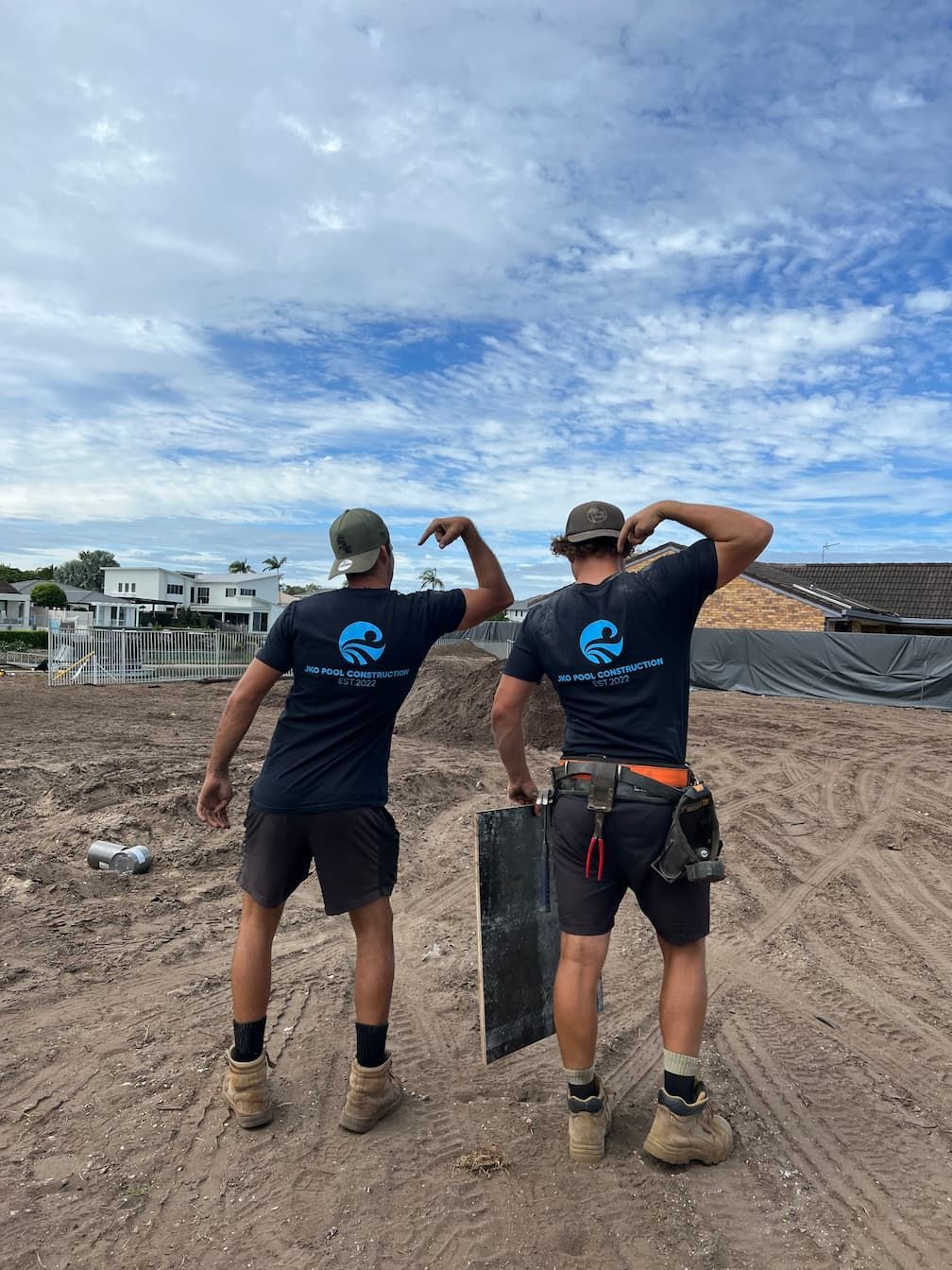
Written By Blake & Josh
With a combined 16 years of hands-on experience, we pride ourselves on delivering pools built to the highest standard.