
Fully Tiled vs Pebblecrete Pools
After building custom concrete pools across the Gold Coast, we recommend choosing your pool finish with three things in mind. Think about how you want it to feel underfoot, what colour you want the water to look in your backyard and how much of your budget you want to put into the interior.
If you’re building a family pool and want to keep more of the budget for paving or shade, we’d start by comparing fine-pebble samples. If the pool is a feature you’ll see every day from the kitchen or outdoor entertaining area, and you want more control over the colour and detail, a fully tiled interior is worth pricing. On a sunny Gold Coast block, we’d look at both samples outdoors before making the call. A colour that looks muted indoors can look quite different under water in full afternoon sun.
What’s the difference between a fully tiled pool and a pebblecrete pool?
A fully tiled pool has pool-rated tiles across the entire interior, including the walls, floor, steps and benches. Small glass or porcelain mosaics are common because they can follow curves and wrap around details such as steps. A strip of tile around the waterline is a separate option and can be paired with a pebblecrete interior.
A pebblecrete pool has an exposed aggregate finish. Small stones are mixed into a cement-based material, which is applied to the concrete shell. The top surface is then worked to expose the pebbles. The size and blend of the aggregate affect how the surface looks and feels. A fine-pebble finish can feel quite different from the coarser finishes people remember from older pools.
Both are interior finishes for concrete pools. The finish decision sits alongside the shape of the shell, where you put the steps and benches, and how the pool connects to the surrounding paving.
| What to compare | Fully tiled pool | Pebblecrete pool |
|---|---|---|
| Upfront cost | Usually higher due to materials, surface preparation and labour. | Generally lower, with the price varying by aggregate blend and preparation. |
| Appearance | A defined colour and pattern, with grout and tile layout forming part of the design. | A continuous, natural-looking surface with variation from the aggregate. |
| Feel underfoot | Smooth-faced tiles can feel comfortable. Check texture on steps and shallow areas separately. | Textured. Fine aggregate is generally more comfortable than a coarse blend. |
| Cleaning | Smooth tile faces are easy to brush, with grout joints and the waterline needing attention. | Brush regularly, paying attention to steps and other areas where debris settles. |
| Localised repairs | Individual tiles may be replaceable if the issue is isolated and a match is available. | Small areas may be patched, although the repair can differ in colour and texture. |
| Best fit | Homeowners who prioritise appearance, design detail and a smooth feel. | Homeowners who want a durable, natural-looking finish and room in the budget for other features. |
The pros and cons of a fully tiled pool
Where tiles are worth the upgrade
Full tiling gives you more control over how the pool looks up close. You can choose the tile colour, grout colour and layout, or use a contrasting tile to define the edge of a step or bench. Smaller mosaics are particularly useful on pools with curved walls or rounded corners.
A smooth tile face can also feel more comfortable where people spend time with their feet on the surface. That can matter more on a shallow lounging ledge, a long bench or a set of wide entry steps than on the floor of the deep end. Ask to feel the actual tile and discuss suitable texture for those shallow areas before specifying it across the whole pool.
What to budget for
Full tiling generally costs more because the entire interior needs to be prepared and tiled. Curves, step edges, benches and other details can add labour. The tile you pick is only one part of the price. When comparing quotes, ask what each includes for substrate preparation, the specified installation system, tile supply and grouting.
A tiled interior can last well when the installation and water care are right. If tiles start loosening in clusters, have the underlying surface assessed before deciding on a repair. If you choose full tiling, set aside spare tiles from the original batch for future repairs. A discontinued mosaic or a slight change in colour can make a small repair harder to blend.
The pros and cons of a pebblecrete pool
Where pebblecrete makes sense
Pebblecrete is a practical choice when you want a durable concrete pool finish and have several competing priorities for the backyard. If the difference in price lets you add shade where people sit or extend the paving where everyone enters the pool, that may make more difference to how you use it every weekend.
It also suits a backyard where you want the pool to sit comfortably alongside planting, timber or natural stone. The aggregate gives the interior subtle variation across the floor and walls. You can use a waterline tile to bring a more defined detail to the top of the pool while keeping that natural finish below.
What to check before committing
Ask to see and feel the exact blend you’re being quoted. The word “pebblecrete” covers finishes with different aggregate sizes and textures. A homeowner who remembers an older, rough pebble pool might prefer a finer blend, particularly if the pool will have shallow areas where kids stand and play.
Pebblecrete is also a continuous finish. A localised patch can look different from the surrounding surface, especially if the older interior has changed colour over time. If wear is widespread and you want an even appearance, it’s worth comparing the scope of a full resurface with a spot repair.
Which finish gives you the best water colour?
The finish sets the base colour, but depth, sunlight and reflections change what you see. The same finish can look lighter on a shallow step and deeper blue in the main swimming area. Trees, shade and the colour of nearby paving can also change how the water reads from the house.
On a Gold Coast build, we’d start with the view you’ll see most often. If that’s from the kitchen or alfresco, consider where the shade falls at the time of day you usually use that space. Wet samples are a useful starting point. Photos of a completed pool with the same finish, a similar depth and similar light will give you a better sense of the result than a dry sample alone.
Which finish is easier to maintain?
Both need regular brushing, balanced water and attention to the waterline. Smooth tile faces can be easy to brush, while grout adds joints where deposits can build up. Pebblecrete has more surface texture, so pay attention to benches, steps and corners when brushing, especially after a windy day or summer storm.
If you see a white deposit, rough patch or staining, identify the cause and check what your finish can tolerate before choosing a cleaner. For a new pool, follow the start-up and care instructions for the finish in your handover guide. Those early care requirements are worth discussing with your builder before the pool is filled.
Can you change a pebblecrete pool to fully tiled?
It can be an option for an existing concrete pool, depending on the condition of the shell and the surface underneath the old finish. The renovation needs a sound, properly prepared substrate and an installation system suitable for the pool. Cracking, hollow areas or signs of water loss are worth investigating before choosing a new interior.
If the pool layout still works and the main issue is a worn or dated finish, compare a full retile with a fine-pebble resurface and a new tiled waterline. If you’re also replacing coping, adding steps or reworking the surrounds, price those items together so you can see where the extra spend will make the biggest difference.
What we recommend for Gold Coast homeowners
- For a busy family pool, start with a fine-pebble sample and check how it feels where kids will spend the most time, especially on benches and steps.
- For a pool that anchors the outdoor entertaining area, price full tiling and look at examples in lighting similar to your backyard. The colour and detail are easiest to appreciate where you see the pool every day.
- For a renovation with an older pebble finish, start with the condition of the shell and existing surface. Then compare the cost of restoring an even finish with the cost of changing materials altogether.
- If you like both looks, compare fine pebblecrete with a tiled waterline against full tiling. Ask for both prices on the same pool design so you can see what the upgrade adds.
Planning a new concrete pool or updating an existing one on the Gold Coast? Talk to JKO Pool Construction about your backyard, how you want to use the pool and the finishes that suit your project.
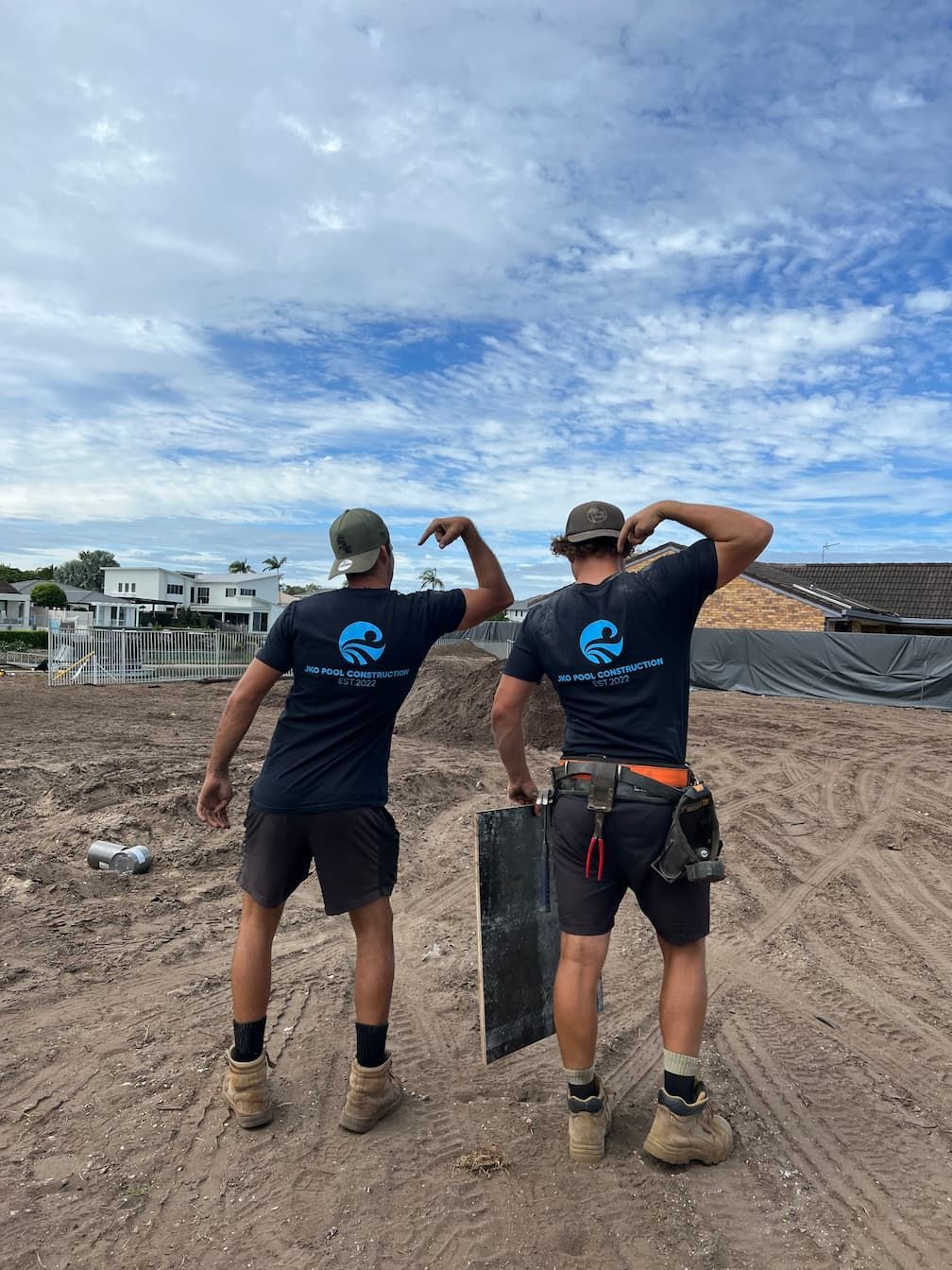
Written By Blake & Josh
With a combined 16 years of hands-on experience, we pride ourselves on delivering pools built to the highest standard.