
Best Pool Surrounds: Best Pool Surround Materials
The right pool surround can completely transform your swimming pool and outdoor entertaining area. It creates a safe and practical space for walking, relaxing and entertaining while also tying the pool into the design of your home.
However, choosing the best material is not always straightforward. Pool surrounds are constantly exposed to water, chlorine, sunlight, dirt and changing weather conditions. A material that looks great in a showroom might become hot, slippery or difficult to maintain once installed beside a swimming pool.
After building pools across the Gold Coast, we’ve seen pool surrounds created using everything from natural stone and porcelain tiles to concrete and timber decking. Each material has its advantages, and the best choice will depend on your property, budget, preferred style and the way you plan to use the area.
In this guide, the team at JKO Pool Construction explains the most popular and effective pool surround materials for Gold Coast homes.
What Should You Look For In A Pool Surround?
Appearance is important, but it shouldn’t be the only factor you consider. Your pool surround needs to remain functional and safe throughout years of regular use.
Before choosing a material, consider:
- Slip resistance when the surface is wet
- How hot it becomes in direct sunlight
- Resistance to chlorine, salt and pool chemicals
- Durability in outdoor conditions
- Cleaning and ongoing maintenance requirements
- Compatibility with your home and landscaping
- Installation and material costs
- Drainage requirements
- Comfort under bare feet
- Whether sealing will be required
The best pool surrounds balance appearance, safety, comfort and durability. It is also important to choose products specifically rated for exterior use around swimming pools.
Pool Tiles
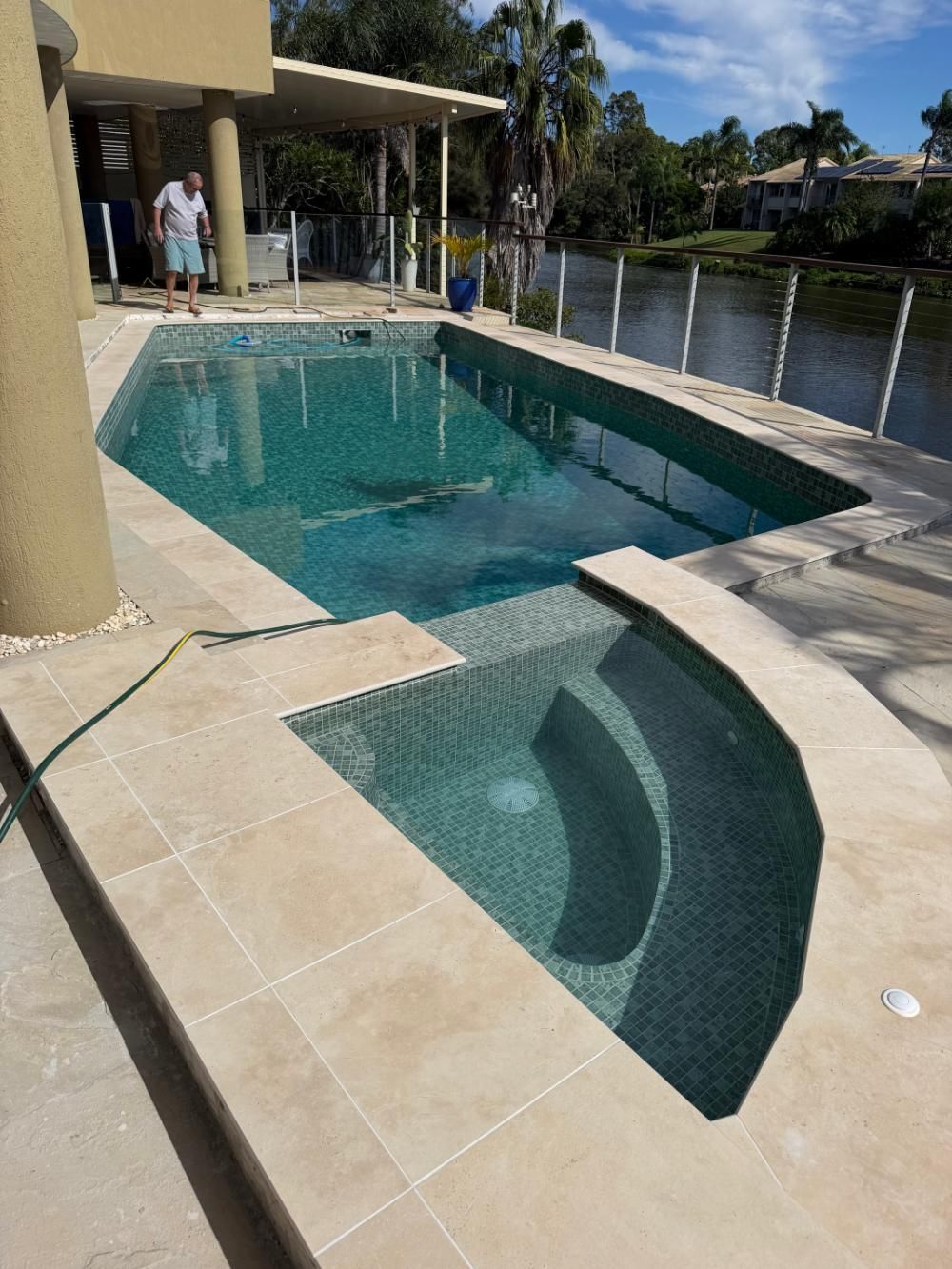
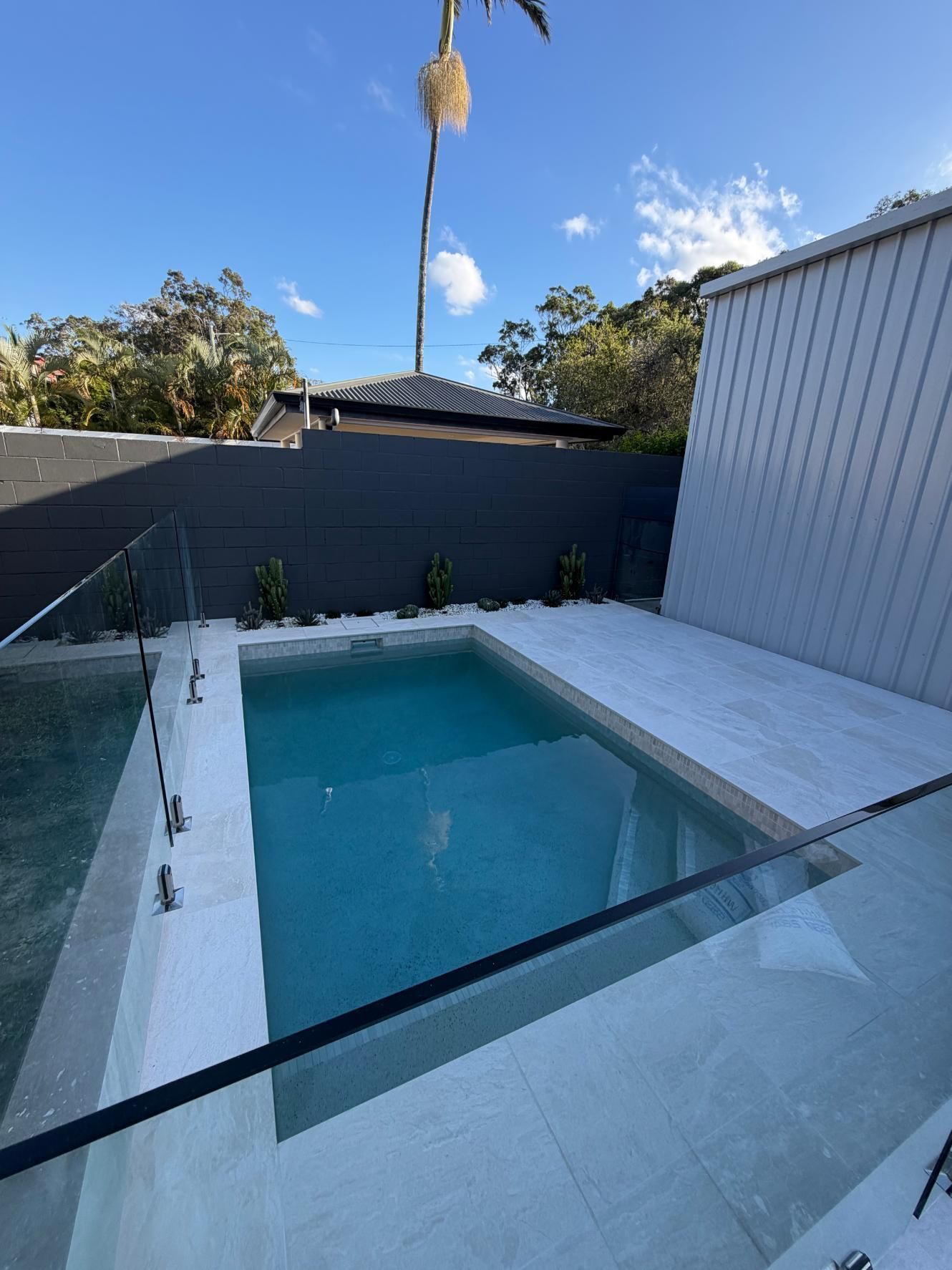
Pool tiles are one of the most popular choices for modern swimming pools. They are available in an enormous range of colours, finishes, patterns and sizes, making it easy to create a surround that complements your pool, house and outdoor area.
Porcelain is generally one of the best tile options for a pool surround. Quality outdoor porcelain tiles have a low water absorption rate and can withstand regular exposure to water, sunlight and pool chemicals. They can also recreate the appearance of natural stone, timber or concrete without requiring the same level of maintenance.
Lighter-coloured tiles are particularly effective around exposed pools because they generally absorb less heat than very dark surfaces. However, the exact temperature will vary depending on the product and finish.
When choosing pool tiles, slip resistance is essential. Smooth indoor tiles should never be used simply because they match the flooring inside the house. Select an outdoor product with an appropriate slip rating and a textured finish designed for wet areas.
The main benefits of pool tiles include:
- A wide variety of colours and styles
- A clean, modern appearance
- Easy day-to-day cleaning
- Good resistance to moisture
- The ability to coordinate the surround and pool coping
- Options for contemporary, coastal and resort-style designs
Pool tiles can cost more than standard concrete, particularly when premium products or complicated laying patterns are selected. The foundation also needs to be prepared correctly to minimise movement and cracking.
Natural Stone
Natural stone is an excellent option for homeowners who want their pool area to feel luxurious, organic and connected to the surrounding landscape. Travertine, granite, limestone and some types of sandstone are regularly used around Australian swimming pools.
Every piece of natural stone has its own variation in colour and pattern. This creates a distinctive finish that manufactured materials cannot perfectly reproduce. Stone works particularly well with tropical gardens, rendered homes and resort-style concrete pools.
Travertine is a popular choice because it provides a timeless, high-end appearance and is often comfortable underfoot. Its neutral tones suit many Gold Coast homes and landscaping styles.
However, not every stone product is suitable for every pool. Natural stone can be porous and may absorb moisture, chemicals or stains. Some varieties require regular sealing, while saltwater pools can affect certain stones if the material is not selected, installed and maintained correctly.
Before installing natural stone, check its:
- Slip resistance
- Porosity
- Heat retention
- Suitability for saltwater or chlorinated pools
- Sealing requirements
- Resistance to staining
- Maintenance recommendations
Natural stone is often more expensive than concrete, but its premium appearance can add considerable visual impact to a new pool area.
Concrete Pool Surrounds
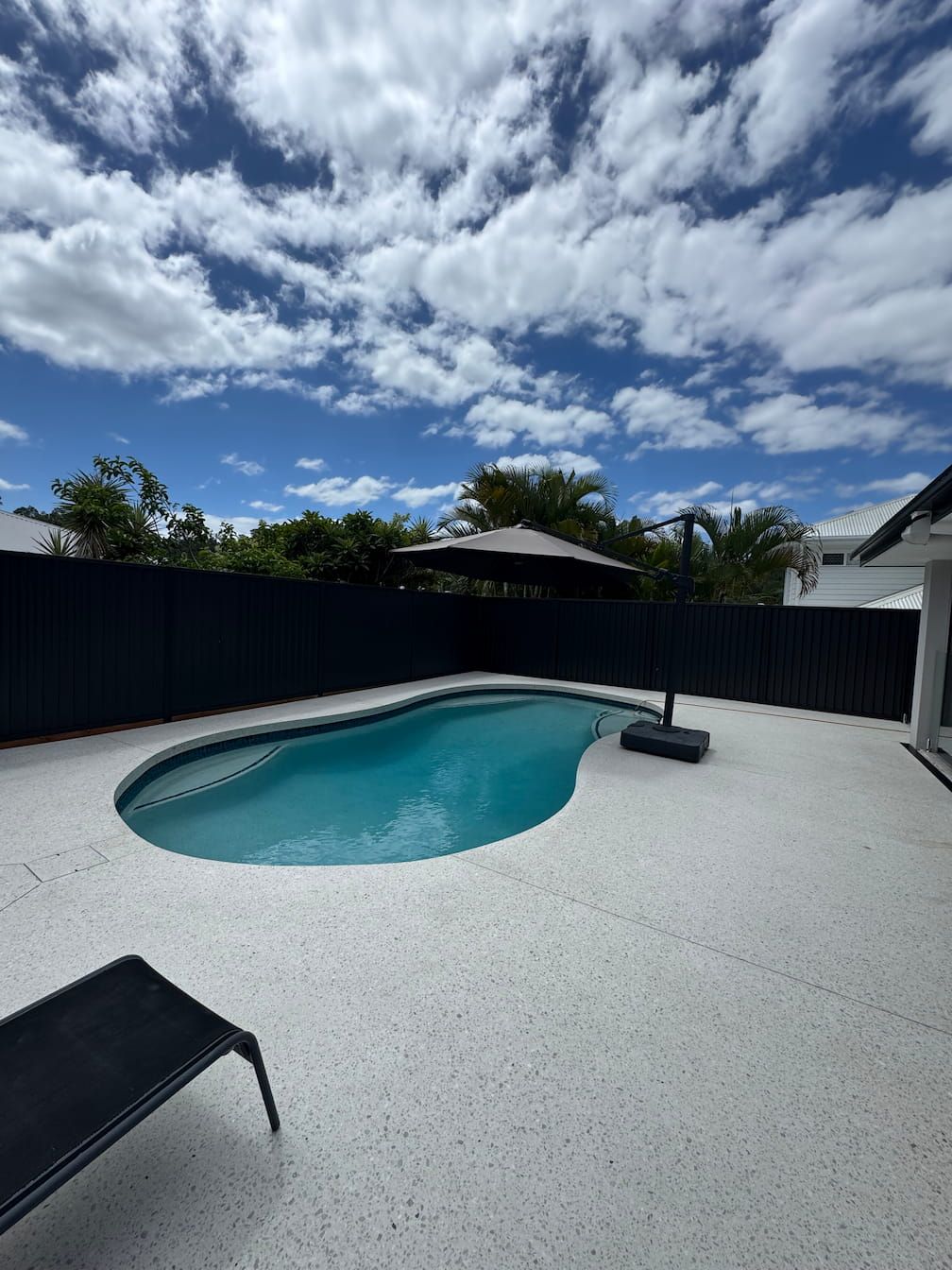
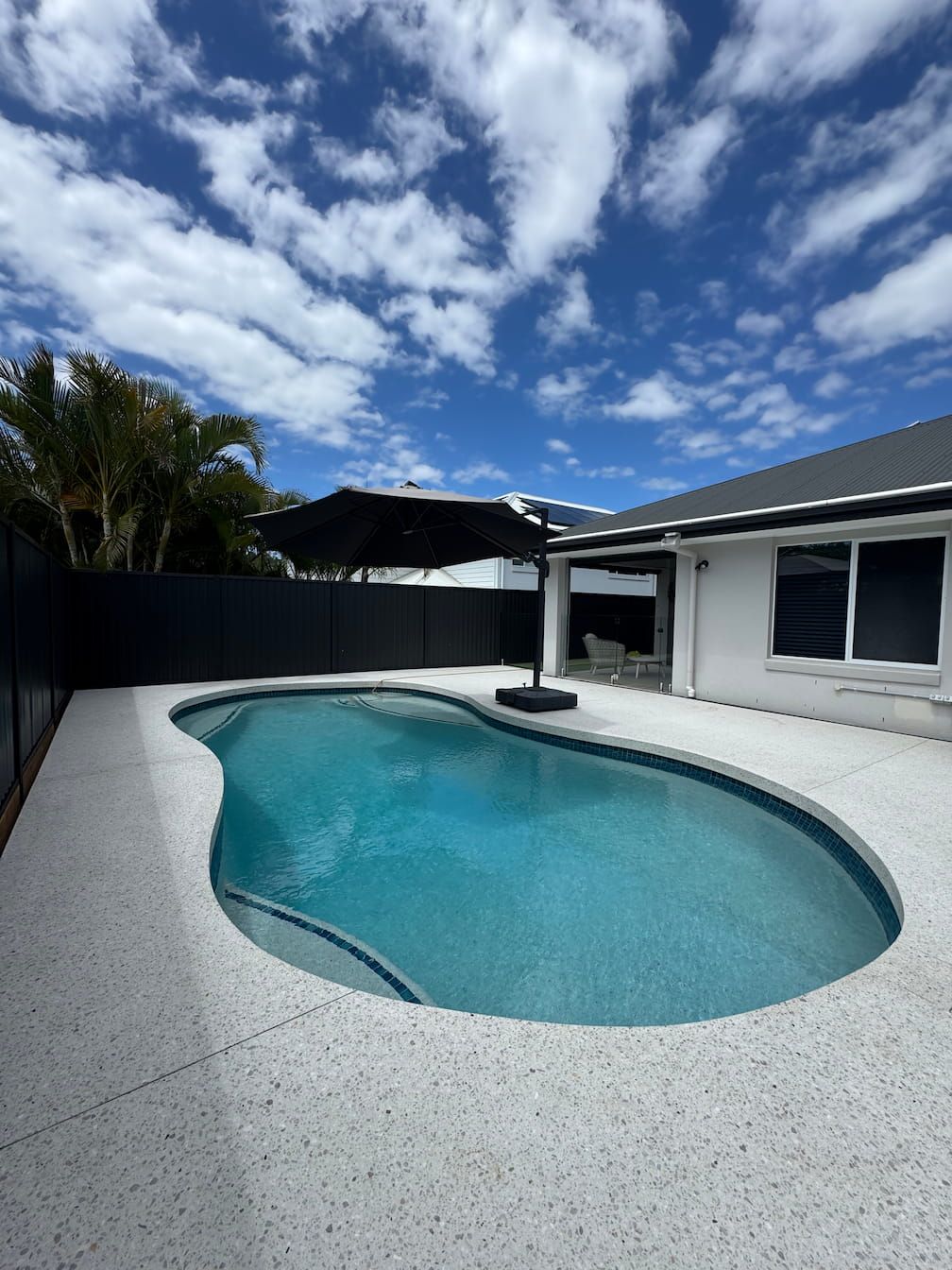
Concrete is one of the most versatile and cost-effective materials for pool surrounds. It can be formed around pools of almost any shape, which makes it particularly useful for custom concrete swimming pools, curved designs and backyards with unusual dimensions.
A basic concrete finish creates a clean and practical surface, while decorative options allow you to achieve a more customised appearance. Depending on the design, homeowners may consider coloured concrete, exposed aggregate, honed concrete or other textured finishes.
Exposed aggregate is especially popular because the visible stones add texture and visual interest. It can complement contemporary homes and withstand regular outdoor use when installed correctly.
Concrete pool surrounds offer several advantages:
- Strong and durable construction
- Suitability for custom shapes
- A relatively seamless appearance
- Multiple colours and finishes
- Lower material costs than many premium tiles or stones
- Simple integration with paths and entertaining areas
Concrete can become hot under strong sunlight, especially when dark colours are used. It may also develop cracks over time due to ground movement, settlement or temperature changes. Correct preparation, drainage, reinforcement and the placement of control joints are important parts of achieving a durable result.
Concrete is a practical choice for families wanting a functional surround without the higher cost of covering the entire area in premium stone or porcelain.
Timber Decking
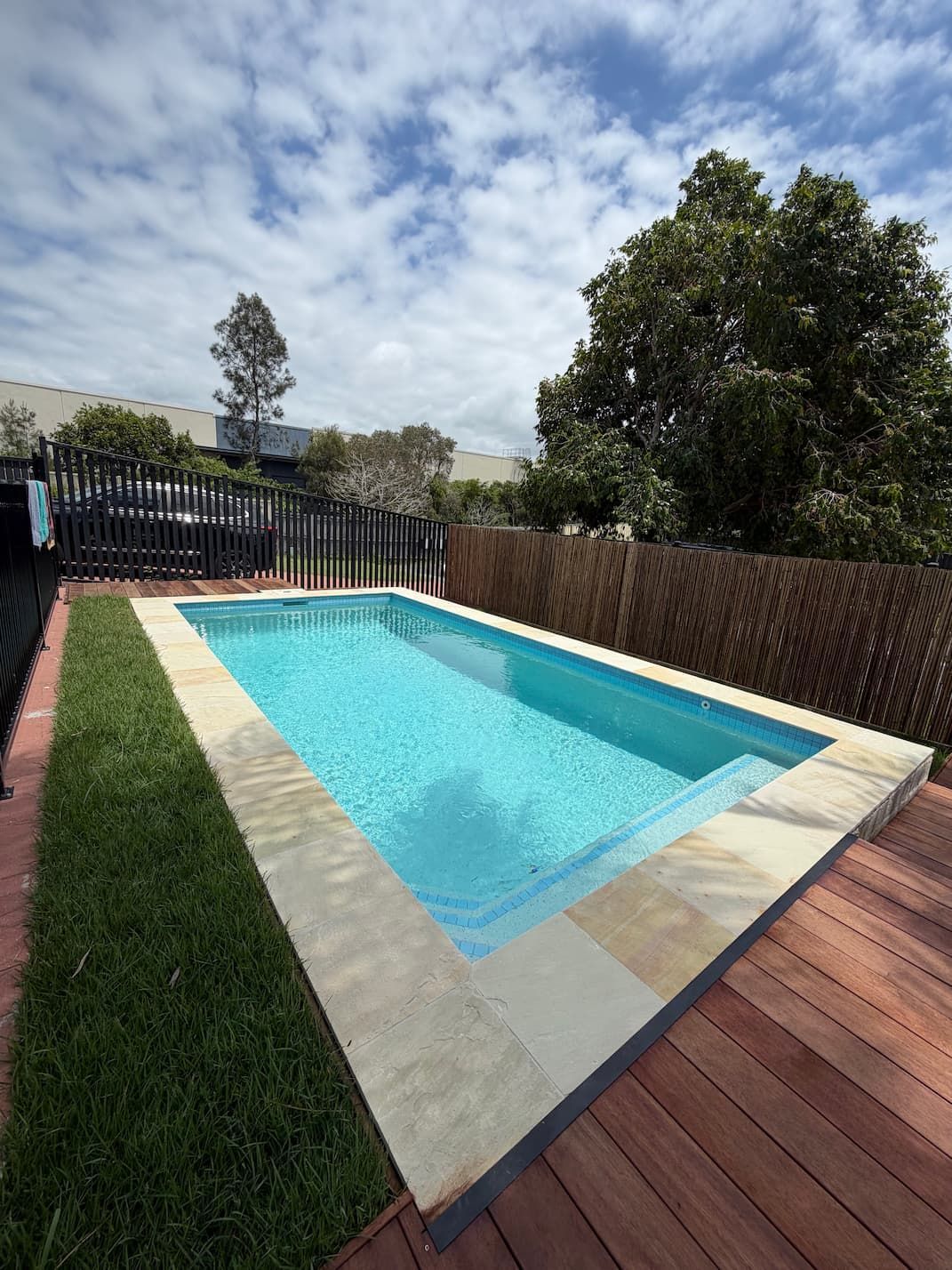
Timber decking creates a warm, relaxed appearance that is well suited to the Gold Coast lifestyle. It can soften the look of a concrete pool and helps connect the swimming area with gardens, patios and outdoor entertaining spaces.
A deck can also be useful on sloping or difficult blocks. Rather than heavily modifying the land to create a solid paved area, a correctly engineered structure may be built to suit changes in ground level.
Popular options include durable hardwoods and properly selected treated timber. The precise species, treatment and fixing system matter because the deck will be exposed to moisture and pool chemicals.
The advantages of timber decking include:
- A natural and welcoming appearance
- Comfort under bare feet
- Suitability for raised or sloping areas
- Easy integration with stairs, seating and entertaining zones
- Compatibility with tropical and coastal landscaping
The trade-off is maintenance. Timber generally needs periodic cleaning, oiling or sealing to protect its colour and condition. If maintenance is neglected, it may fade, split, warp or become rough underfoot. Water should also be able to drain and circulate beneath the boards.
Timber is a great choice if you love its natural appearance and are comfortable completing the required maintenance.
Composite Decking
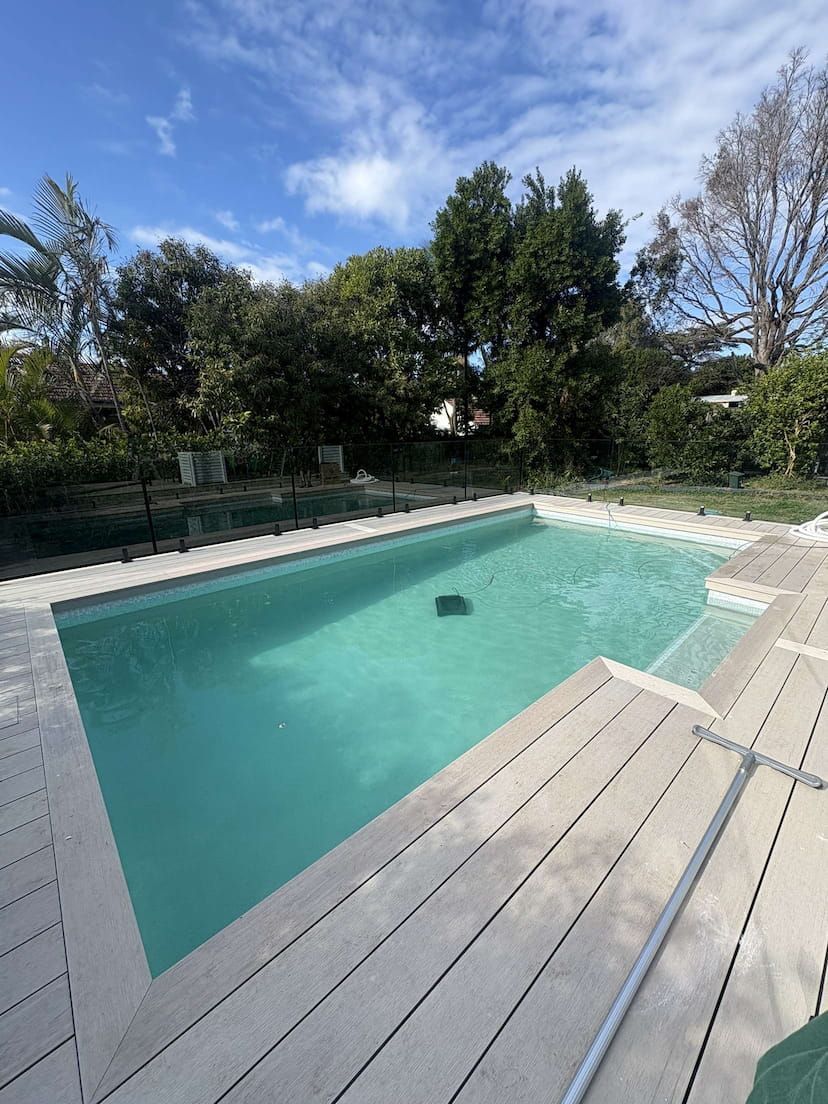
Composite decking provides an alternative for homeowners who like the appearance of a deck but would prefer less maintenance. It is manufactured using a combination of materials and is available in colours and textures designed to resemble timber.
Unlike natural timber, composite decking does not usually require regular staining or oiling. Quality products can also resist rot, splintering and insect damage, making them attractive for busy households.
Potential advantages include:
- Lower ongoing maintenance
- No regular oiling or staining
- Consistent colour and appearance
- Resistance to splintering
- A broad range of modern finishes
Not all composite products perform in the same way. Some can become noticeably hot in direct sunlight, particularly in darker colours. Expansion, ventilation, drainage and the manufacturer’s installation requirements must also be considered.
If you are thinking about composite decking, ask to see and touch a sample that has been left in direct sunlight. This provides a more realistic idea of how the material may feel beside your pool during summer.
Brick And Clay Pavers
Brick and clay pavers can suit traditional, Mediterranean and character-style homes. Their warm colours create a softer appearance than large-format porcelain tiles, while individual pavers can usually be replaced if one becomes damaged.
Pavers are available in various shapes, colours and laying patterns. They may be used to create borders or feature sections, even when another material is installed throughout the main pool surround.
The surface must be selected carefully because some pavers are porous or can become slippery when wet. Uneven settling may also create trip hazards if the foundation is not properly prepared.
While brick pavers are less common around highly contemporary pools, they can be extremely effective when they suit the architecture and landscaping of the property.
Artificial Grass Around A Pool
Artificial grass is sometimes installed beside pools to add colour and reduce the amount of hard landscaping. It can be particularly useful in small sections where homeowners want the appearance of a lawn without mud, mowing or grass clippings entering the water.
It generally works best as a complementary material rather than the only pool surround. For example, tiles or concrete might be installed around the immediate pool edge, with artificial grass used near seating or landscaped areas.
Quality, drainage and heat should all be considered. Some artificial turf can become hot in direct sunlight, and poor drainage may allow water to collect underneath. The product and installation system should be designed for outdoor use near a swimming pool.
Combining Different Pool Surround Materials
You don’t necessarily need to choose one material for the entire area. Some of the most effective pool surrounds combine two or more finishes to create distinct zones.
You could use:
- Porcelain tiles around the immediate pool edge
- Timber decking beneath an outdoor seating area
- Natural stone as a feature or coping
- Concrete for paths and high-traffic areas
- Artificial grass between the pool and garden
- Pebbles or gravel in decorative, non-traffic areas
Combining materials adds texture and can help manage the budget. Premium stone might be used where it will have the greatest visual effect, while a more economical finish covers the larger surrounding area.
The key is keeping the overall design cohesive. Colours, levels, drainage and transitions should be planned before construction begins.
What Is The Best Pool Surround For The Gold Coast Climate?
Gold Coast pool surrounds must cope with strong sunlight, high summer temperatures, humidity, heavy rain and frequent use throughout much of the year. Coastal properties may also face salt-laden air, while subtropical conditions can encourage mould and organic growth in shaded or poorly drained areas.
For many Gold Coast homes, light-coloured, slip-resistant porcelain tiles are one of the best all-round options. They offer a modern appearance, relatively simple maintenance and good resistance to moisture when the correct exterior product is chosen.
Textured natural stone can also perform well and is ideal for homeowners wanting a premium resort-style finish. However, you need to choose a stone that is suitable for your pool type and commit to any recommended sealing.
Concrete and exposed aggregate are effective options for families wanting durability, design flexibility and value. They are particularly useful around custom-shaped pools, although lighter colours and suitable finishes should be considered to manage heat and improve comfort.
Timber decking suits the Gold Coast’s relaxed outdoor lifestyle and works beautifully with tropical gardens. It does, however, require more maintenance in our humid, high-UV conditions. Composite decking may reduce this maintenance, but its heat performance needs to be checked before selection.
Regardless of the material, proper drainage is particularly important on the Gold Coast. Heavy rainfall needs somewhere to go without flowing into the pool, collecting against structures or creating persistently damp areas.
Which Pool Surround Material Is Best For Your Home?
There is no single material that will be best for every swimming pool. Your decision should account for the design of the pool, your home’s architecture, the amount of direct sunlight, your maintenance preferences and the available budget.
Tiles are excellent for a sleek and consistent finish. Natural stone creates a premium and timeless appearance. Concrete provides strength, flexibility and value, while timber and composite decking can give your outdoor area a warmer, more relaxed character.
It is best to consider the pool and surrounding area as one complete design rather than treating the surround as an afterthought. Planning the coping, drainage, access, entertaining space and landscaping early can produce a safer and far more cohesive result.
Choosing The Best Pool Surround For Your Gold Coast Home
The best pool surround is one that balances safety, durability, comfort and appearance. For Gold Coast homes, light-coloured porcelain tiles, natural stone and exposed aggregate concrete are reliable options that can handle heat, heavy rain and regular pool use. Timber and composite decking can also create a warmer, more relaxed outdoor area, provided you consider maintenance and surface temperature.
Before deciding, compare each material’s slip resistance, heat retention, maintenance requirements and suitability for your pool type. By planning the surround alongside the pool, drainage and landscaping, you can create a cohesive outdoor area that remains practical, comfortable and attractive for years to come.
Written By Blake & Josh
With a combined 16 years of hands-on experience, we pride ourselves on delivering pools built to the highest standard.